

-

Alden Gonzalez
LOS ANGELES — In the wake of another championship, which made them the first Major League Baseball team in a quarter century to repeat, the Los Angeles Dodgers mostly downplayed their ability to dominate another offseason. They believed their roster was already good enough, and they vowed to let the market come to them rather than chase stars aggressively.
They got them anyway.
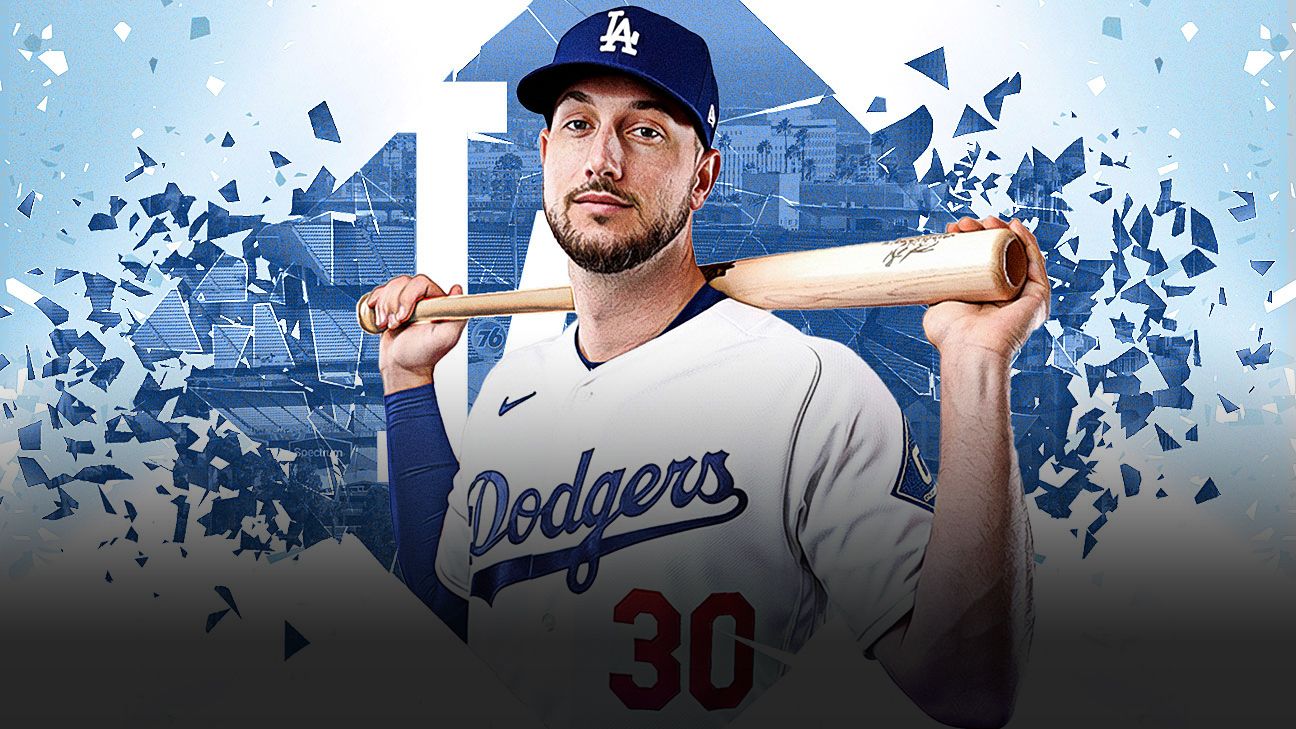
Kyle Tucker, the consensus best player available in free agency, agreed to join the Dodgers on Thursday, sources told ESPN, a little more than a month after star closer Edwin Diaz did the same. Tucker’s deal is for four years at $240 million and includes opt-outs after the second and third seasons, sources told ESPN’s Jeff Passan and Jesse Rogers.
The Dodgers hardly ever reward opt-outs under president of baseball operations Andrew Friedman. But they made a similar concession for Japanese starting pitcher Yoshinobu Yamamoto two offseasons ago and ultimately did the same for Tucker, a mechanism that helped them beat out the New York Mets and the Toronto Blue Jays for his services.
Tucker, who will turn 29 on Saturday, comes in as the everyday right fielder and joins a star-studded lineup that includes Shohei Ohtani, Freddie Freeman, Mookie Betts, Will Smith and Max Muncy. The addition of Tucker ultimately could push the Dodgers to trade corner outfielder Teoscar Hernandez, but a source familiar with the team’s thinking said that is not necessarily a foregone conclusion. The team can easily shift Hernandez from right field to left, with Andy Pages remaining the everyday center fielder and utility man Tommy Edman, coming off ankle surgery, entrenched as the second baseman.
Tucker’s deal comes with $30 million deferred, a source told ESPN, confirming multiple reports. That gives it a present-day average annual value of $57.1 million, a record, beating Juan Soto’s $51 million AAV with the Mets. Because the Dodgers are already on track to exceed MLB’s highest luxury tax threshold in 2026, prompting a 110% average, Tucker will cost them $119.9 million annually.
As a way to offset those deferrals, the Dodgers also rewarded Tucker with a $64 million signing bonus, $54 million of which will be paid up front, according to a source.
That, sources have said, is not a problem. Dodgers owner Mark Walter has generated outsize revenue from Ohtani’s presence over the past two seasons and benefits from a lucrative, ironclad local media contract at a time when many teams are seeing those revenues dry up. Walter has been adamant about pumping that money back onto the roster, especially with a three-peat possible and a lockout looming thereafter.
The Dodgers paid close to $170 million in luxury taxes last year, more than the second- and third-place Mets and New York Yankees combined. Their competitive balance tax (CBT) payroll finished at $417 million. With Tucker, they’re projected for a CBT payroll of slightly over $400 million by season’s end, according to Cot’s Contracts.
When healthy, Tucker is one of the sport’s most gifted players — a complete hitter who plays excellent defense and can be a threat on the bases. Tucker showed that with the Houston Astros, the team that made him a fifth pick out of high school, from 2021 to 2023, during which he slashed .278/.353/.517 with 89 home runs and 69 stolen bases while compiling 16.3 Baseball Reference wins above replacement and winning a Gold Glove and a Silver Slugger.
The 2024 season was looking even better. As of June 3, Tucker held a .979 OPS and seemed on his way to making a case for the MVP. But he missed three months with a shin fracture and was traded to the Chicago Cubs in the ensuing offseason, going into his final year before free agency.
Tucker slashed .266/.377/.464 with 22 home runs, 73 RBIs and 25 stolen bases in 136 games for a Cubs team that featured one of the sport’s best offenses, though he missed most of September with a calf strain. His range in the outfield was subpar for the third straight year, though his arm strength continued to be above average.
Tucker went into the offseason as the headliner in a free agent crop that lacked legitimate star power.
ESPN’s Kiley McDaniel projected an 11-year, $418 million contract, but Tucker’s market was limited. In the end, seemingly only the Blue Jays were willing to go long term, and sources throughout the industry were skeptical that Tucker wanted to play in Toronto. The Mets offered a deal in the $50 million-a-year range, sources told ESPN, but many were skeptical he wanted to play in New York. Los Angeles, where Tucker can play on a contender without having to carry a franchise, ultimately became the ideal landing spot — the continuation of a theme.
Three offseasons ago, the Dodgers landed Ohtani on a $700 million deal with $680 million deferred and lavished Yamamoto with the largest contract given to a starting pitcher — a 12-year, $325 million deal. A year later, they landed Blake Snell on a five-year, $182 million contract. Now they have Tucker, who represents their eighth player on a nine-figure deal (also Tyler Glasnow, Betts, Freeman and Smith). That doesn’t even include Diaz, who spurned the Mets with a three-year, $69 million deal on Dec. 9.
The Dodgers won the World Series last year despite fielding a horrific bullpen, doing so by using a bevy of starting pitchers — including Roki Sasaki, who made a late-season conversion to closer — in an effort to hold leads late. By signing Diaz, the Dodgers shored up their roster’s biggest weakness and balanced out a pitching staff carried by a star-studded rotation. By adding Tucker, they fulfilled a need for a left-handed-hitting outfielder. Rather than going the conservative route and trading for one, they instead signed the best player available.
Diaz and Tucker both signed deals after rejecting qualifying offers, which means the Dodgers will forfeit their second, third, fifth and sixth highest picks in this summer’s draft. They’ll also pay both of them more than double in taxes. And in the end, it doesn’t matter.
To the Dodgers, only winning does.
ESPN’s Jeff Passan and Jesse Rogers contributed to this report.