

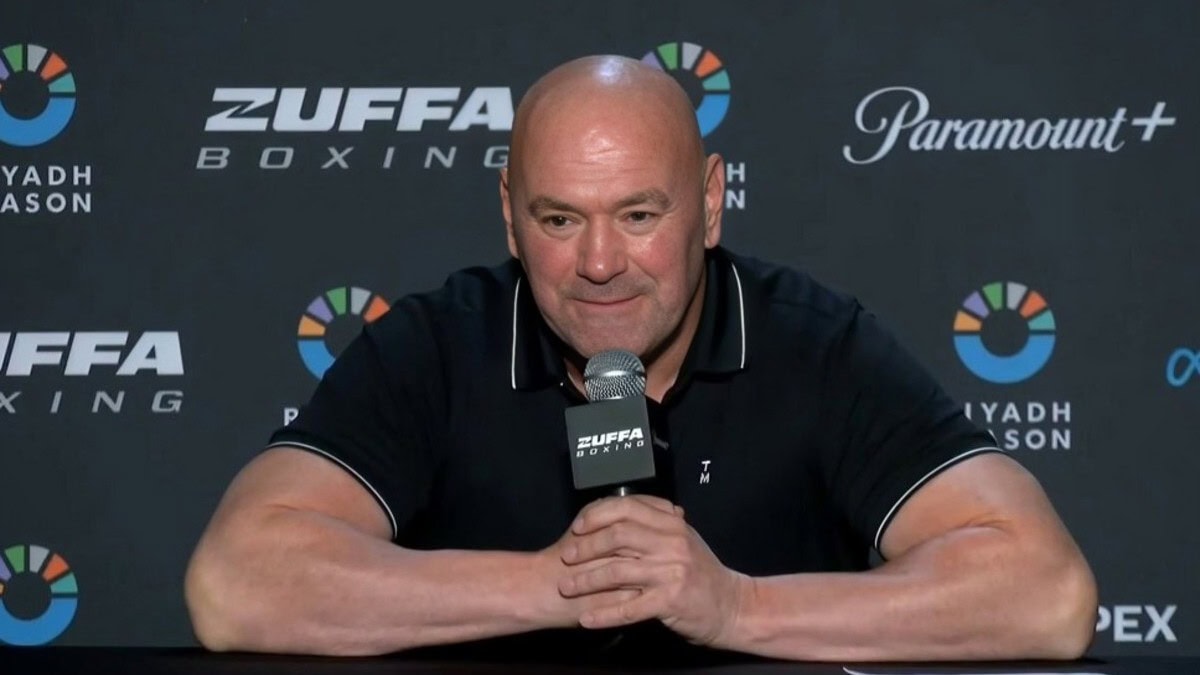
Dana White confirmed that fighters signed to Zuffa Boxing can compete on non-Zuffa events, keeping the door open for crossover fights with champions from outside the promotion.
Asked specifically whether a Zuffa fighter could hold both a Zuffa belt and The Ring Magazine title at the same time, White said yes at the recent press conference for Z02.
The clarification is important because it establishes that Zuffa is no longer positioning itself as a closed system in which its boxers are locked into a single set of titles.
What White’s answer allows in theory
White’s comments suggest a pathway where a Zuffa and Ring titleholder could face champions from the four major sanctioning bodies — the WBA, WBC, IBF, and WBO — without contractual barriers or rankings preventing the matchup.
In practical terms, that creates the possibility of a single undisputed night where a Zuffa and Ring champion and a four-belt champion could meet with multiple recognized titles on the line.
What happens to those belts afterward is less clear and would depend on the rules and approval of the relevant sanctioning bodies.

Opetaia is the obvious test case
The recent signing of IBF cruiserweight champion Jai Opetaia underlines how the concept could work in real life.
As a reigning Ring belt holder entering the Zuffa system, Opetaia can remain champion provided any defenses meet the IBF’s requirements, including opponent approval and any other sanctioning conditions attached to title bouts.
That point is key. White’s answer may remove the promotion-level restriction, but it does not automatically guarantee that outside titles stay in play.
Those decisions sit with the sanctioning bodies, and the rules can vary depending on the opponent, the event format, and the terms of a defense.
A pathway, not a finished plan
There is still plenty to be worked out, particularly with wider regulatory questions around Zuffa’s intended league structure. But at minimum, White’s confirmation establishes a workable route for Zuffa fighters and traditional champions to meet in the same ring to settle divisional supremacy.
Even if an “undisputed” scenario proved temporary under boxing’s title politics, it would still produce a clear “man who beat the man” outcome on the night — which, historically, is the simplest way boxing recognizes a true leader in a division.
About the Author
Phil Jay is the Editor-in-Chief of World Boxing News (WBN), a veteran boxing reporter with 15+ years of experience. He has interviewed world champions, broken international exclusives, and reported ringside since 2010. Read full bio.