

MIAMI — Big money is on the line during the finale of baseball’s premier international event, courtesy of nine figures from Netflix.
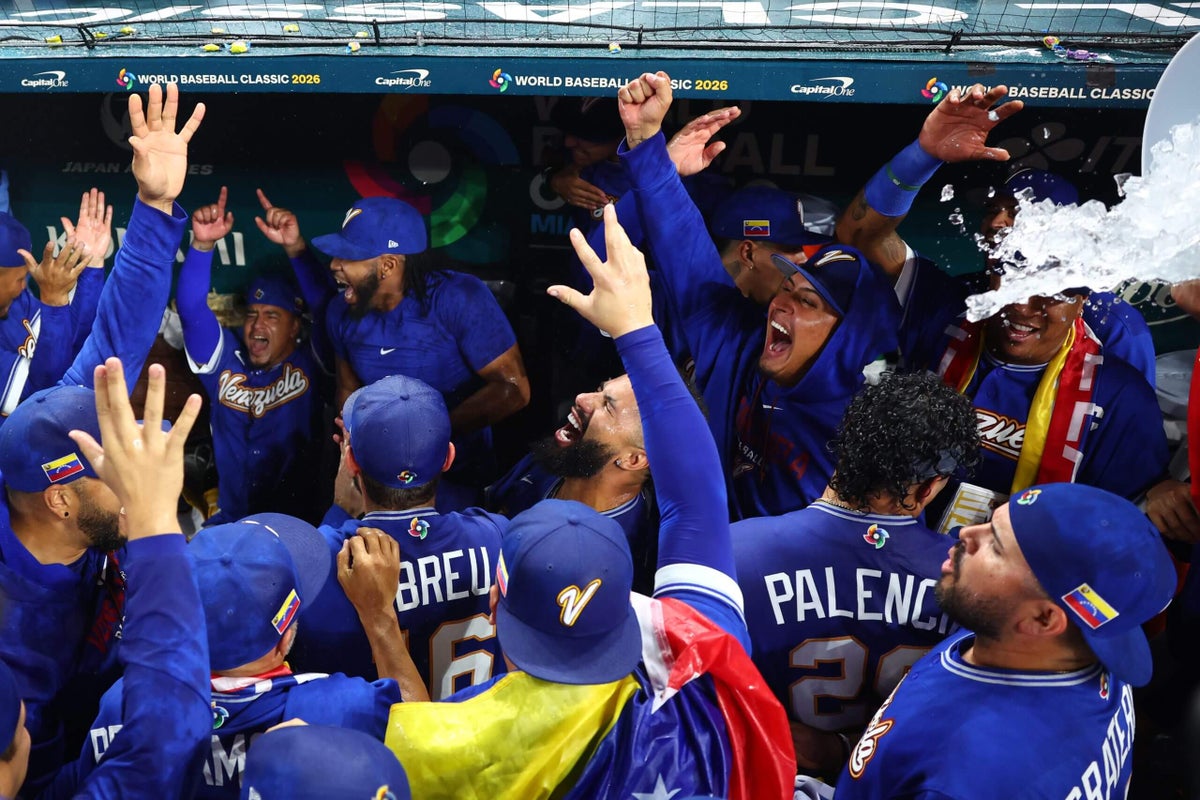
Each player on the winning team in Tuesday night’s World Baseball Classic championship between the U.S. and Venezuela will receive over $100,000 in prize money, a person briefed on the tournament’s operation who was not authorized to speak publicly said, adding that payouts for all 20 teams that participated in the tournament have more than doubled since the last WBC in 2023.
The payments to players reflect only half the total prize money given to each participating team. The other half goes to their respective baseball federations: Team USA or Team Venezuela, and so forth. Each team’s haul depends, of course, on how far it advanced.


BEAT OUR EXPERTS
Predict how you think the tournament will
play out. Can you beat one of our experts?
The tournament’s popularity has grown immensely since the last go-around in 2023, and so too have its revenues. Netflix struck a deal with the WBC for Japanese broadcast rights worth over $100 million, according to people with knowledge of the deal.
The deal has created controversy in Japan because it could reduce the number of Japanese fans who have access to telecasts. Japanese fans are not as accustomed to using streaming services to watch sports as viewers are stateside. But the rights fee has helped to greatly increase the prize purse.
Major League Baseball and the Players Association, which jointly operate the WBC, declined to provide a schedule of prize payouts.
Jeremiah Yolkut, MLB’s senior vice president for global operations and events, said he first looks at the business elements when evaluating the tournament’s success, including sponsorship and media.
“Then what I think is sort of a critical part of this is the buzz around the tournament, which is in some ways really hard for us to capture,” Yolkut said. “When you go on social media and you see people that are talking about baseball on a regular basis talking about it, that’s the first point of, look, we’re doing well.
“But then when you start to see it sort of break through other cultural media outlets, that’s where I think we’re seeing more and more interest. Whether it’s on the Today Show in the morning, or it’s on a news outlet that wouldn’t necessarily be covering baseball in the middle of March, I think you start to see the impact that it has, and then you also see the global reach of it.”
Vinnie Pasquantino of Team Italy said after a 4-2 loss to Venezuela on Monday night in the WBC semifinals that he had been informed millions of viewers had watched the game in Italy, despite it being broadcast in the wee hours of the night in Europe. “That’s incredible,” Pasquantino said. “That’s why we’re doing this tournament, in my opinion.”
“It’s not only (media) outlets in countries that love baseball,” Yolkut said. “Even countries like Italy that maybe don’t have baseball on the back page or the front page of the newspaper, that are talking about Team Italy here. It’s a combination of all those things combined, and whether it’s the dollars or the amount of people participating or people talking, it’s a real positive.”
MLB plans to release a breakdown of viewership figures and other business statistics after the tournament concludes.
The prize money is predetermined before the tournament, agreed to by the league and the union, and it’s based on a percentage of projected revenues. After the prize money and tournament expenses are accounted for, the net revenues from the WBC are split in three equal parts: One third goes to MLB and another third to the players’ union, where players choose how to best allocate the funds.
The final third is distributed to the World Baseball Softball Confederation and the top leagues in two other countries: Korea Baseball Organization and Nippon Professional Baseball of Japan.
The WBSC organizes international tournaments and helps to grow the game globally.
“The idea is that you want to develop baseball in these countries, so that there’s a pipeline of future players,” Yolkut said.
Part of the tournament’s expenses include payments to host venues, which this year were in Houston, Miami, San Juan and Tokyo.
For international venues, the WBC strikes deals with promoters. The promoter is responsible for ticket sales and gives the tournament a certain amount of revenue. In the U.S., the hosting MLB team gets a portion of the revenue.
“We have to reconcile the entirety of the event and look at all the revenues and then obviously the expenses,” Yolkut said, “and then those monies come out later.”