

The Bounce Newsletter  | This is The Athletic’s daily NBA newsletter. Sign up here to receive The Bounce directly in your inbox.
With the second round of the NBA Draft tonight, this is the perfect time to remind you that three-time MVP Nikola Jokić was drafted with the 41st pick during a Taco Bell commercial back in 2014.
NBA Draft
Toast ’em or roast ’em! Round 1 reactions
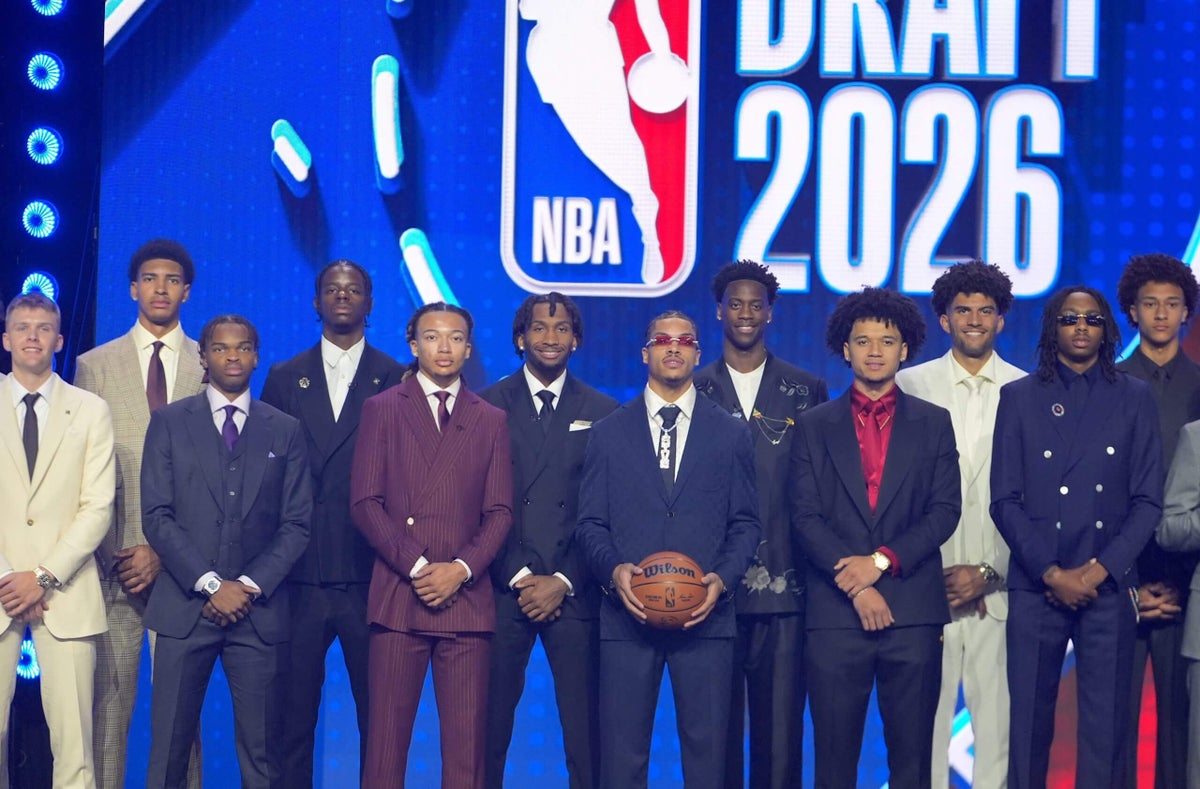
Round 1 of the 2026 NBA Draft went off without a hitch last night, and 30 dreams came true. The Wizards took AJ Dybantsa with the top pick, as most of us expected. The Jazz followed that up with Darryn Peterson at No. 2. The Grizzlies brought in Cameron Boozer with the third pick, and the Bulls took Caleb Wilson with the fourth. After that, we weren’t sure what would happen.
Sam Vecenie and John Hollinger graded every pick from last night. And I’ll leave it to Sam for the winners and losers of the night. For Bounce purposes, let’s instead go with a game of “Toast ‘em or roast ‘em” for our breakdown of the big picks:
Toast ‘em: Spurs take Jayden Quaintance and Tarris Reed Jr. 🥂
San Antonio really struggled in the non-Victor Wembanyama minutes this past postseason. Luke Kornet is fine in the regular season, but the Spurs couldn’t score or stop anybody when he was in a playoff game. Quaintance, at pick No. 20, addresses the defensive portion of that, although he needs another knee operation. So they also traded back into the first round to get Tarris Reed Jr. with the 26th pick to be a backup big man. He can really score around the rim.
Roast ‘em: Bulls take Dailyn Swain with the 15th pick 🧯
Love the Bulls taking Wilson at No. 4. That was the right call, and he could end up as a star in this league. However, following that up with Swain at 15 was a head-scratcher. He can create and he can get into the paint. That matters. His shot is not convincing, and they could have taken a guard like Christian Anderson to help with that in the backcourt. Speaking of …
Toast ‘em: Hornets take Hannes Steinbach and Christian Anderson 🥂
Brilliant first round for Charlotte. Steinbach has incredible hands, is great in the pick-and-roll and might be the best rebounder in the draft. Charlotte needed more presence inside. Anderson is probably the best shooter in the draft. He’ll be big off the bench behind LaMelo Ball.
Roast ‘em: Memphis trading down to get Karim López 🧯
The Grizzlies still got an incredible player at 3 with Boozer going to them. So why follow that up by trading down from 16 to 17 to 21 just to grab a project like Karim López, who plays the same position as Boozer? López might be good, but he doesn’t fit what they did the previous hour.
Toast ‘em: Bucks ending up with Brayden Burries and Nate Ament 🥂
Milwaukee went with a safe pick in Burries at 10 to bring in a high-quality guard who can do a little bit of everything. He’s going to contribute right away. Then with the 13th pick, which they got in the Giannis trade, the Bucks took a big swing with Ament. He’s definitely a risk, but they have to trust Taylor Jenkins and their future development with Ament. Good gamble.
Value picks I loved
- Darius Acuff Jr. (Arkansas) was easily a top-five and maybe even top-four pick on my board. The Kings, in desperate need of a star and a future, landed him at No. 7.
- Dusty May and the Mavericks grabbing Michigan big man Morez Johnson Jr. at 9. Putting him next to Cooper Flagg on defense will be awesome.
- Labaron Philon Jr. (Alabama) going to Philadelphia at 22 was a great selection. The Spurs proved you can’t have too many guards and Philon allows them to pace Tyrese Maxey’s minutes more.
- The Lakers trading up one spot to 24 to grab Cameron Carr from Baylor was big. He can really shoot the ball, and he jumps out of the gym.
- The Suns traded into the first round, at 30, to grab Koa Peat (Arizona). Peat was someone people thought could be a late lottery pick, so him falling all the way to 30 is surprising. He needs to learn how to shoot, but he could thrive in Jordan Ott’s frantic system.
Picks that were gambles
- The Nets landing Mikel Brown Jr. (Louisville) at No. 6 with Acuff and Kingston Flemings on the board is definitely a risk. He’ll have plenty of time to grow in Brooklyn, though.
- The Thunder grabbed Aday Mara (Michigan) at 12, which could be an overreaction to Wemby torturing you in a playoff series a month ago.
- The Raptors took Allen Graves (Santa Clara), an analytics darling, at 19, despite having needs for a big man or a point guard. Graves is neither.
The Last 24
🏀 Never again. Adam Silver has put his foot down with tanking. “We’ll never go back to where we were.”
🔥 What’s next? The Heat have finally landed Giannis in a trade. John Hollinger tells us what comes next for Miami.
🎷 The right choice. The Jazz selecting Peterson was what they needed. He helps their present and their future.
🔊 “NBA Daily.” Watch and listen to a recap of last night’s games.
Stream the NBA on Fubo (try it for free!) and catch out-of-market games on League Pass.
Second Round
Will tonight produce any good players?
One of the things I’ve always quibbled with when it comes to trade analysis is how valuable the second-round pick is. A team will acquire four second-round picks in a trade for a player and be lauded for their savvy. At the same time, I look at that trade and wonder how many of those second-round picks will yield a single contributor; it can be super valuable for your bottomline if you nail the pick, but it often feels like news-release window dressing to me.
There are plenty of basketball people smarter than me who feel there is tremendous value in acquiring so many picks in the Mark Tatum round. I think it’s mostly because they can be used as sweeteners for a trade, but in terms of acquiring actual players within those selections, I remain pessimistic about it. Is that a blindspot for me? Is it an overestimation for those believers?
As we get into the second round of the draft tonight, I thought it would be good to know what to expect for the gems discovered in this round.
Since the 2000 NBA Draft, we’ve had 111 total players appear in 400 or more games. That feels like a good baseline to consider a second-round player a success. Four-hundred games would theoretically get you through five NBA seasons, and the average NBA career is in the 4.5-to-five years range. For a second-round player, you’re more likely to stretch that into six, seven or eight years of NBA service. And that has to be considered a successful pick.
The reason I chose 2000 for this sample size is because it gives plenty of players the opportunity to flesh out those careers after having their names called on draft night. There have obviously been some unbelievable selections: Jokić, Draymond Green, Marc Gasol, Carlos Boozer and your most recent champion and Finals MVP, Jalen Brunson, were all taken in the second round since 2002. That gives us a good 20-year window of recency when you factor in that the guys drafted since 2020 need more time to accumulate 400 games or more.
So how many players should we expect to be good, NBA contributors from tonight? Let’s look at the data!

As you can see, it fluctuates quite a bit, which makes sense considering not all draft classes are created equal. Since 2000, the second round has brought the NBA these accolades:
- 39 All-Star selections, 25 All-NBA selections
- Four Most Improved Player awards
- 23 All-Defensive selections
- Six Sixth Man awards
- Two Defensive Player of the Year awards
- Three MVP awards
- Two Finals MVP awards
- One Rookie of the Year award
Yes, a lot of those awards are influenced by Jokić, Green and Brunson being second-round guys. On average over those 20 years, we see about 5.5 players end up finding their way to 400-plus games. In the entire history of the NBA, the second round of the draft has produced 294 players who have totaled a minimum of 400 career games.
Tonight’s second round is part of a deep draft, and we still need to see how things will shake out. Just be cautiously optimistic that the finagling of second-round picks will yield a producer.
Hirings
You won’t believe this new contract
There has been a lot of consternation over the new ownership of the Trail Blazers. It’s probably worth us doing a deeper dive into these potential problems and the perception of Tom Dundon as a … creatively frugal (to put it nicely?) new owner in the NBA. If you’re a hockey fan, you recently saw him hoist the Stanley Cup with his Carolina Hurricanes winning the championship this month. So he must know what he’s doing, right?
Well, what works in the NHL may not work in the NBA, and he’s not exactly one of those rare billionaires who thinks he might be doing things incorrectly … if those even exist. Yesterday, the Blazers finally hired a coach, and the contract details of the move were bewildering.
The Blazers nabbed Micah Nori — one of the most respected assistant coaches in the league — away from Chris Finch’s Timberwolves staff. It’s a great hire. There should have been a lot of happiness and excitement over the move. Instead, people were focused on Nori’s new contract, which only furthers the idea that Dundon is operating as a cheapskate owner. From Jason Quick:
“Nori committed to sign a one-year contract with Portland, with team options each of the next two seasons, according to league sources. In a league that values security and the time to build sustainable success, it was a highly unconventional decision — both by Dundon and the 52-year-old Nori.”
That’s right. It’s potentially just a one-year deal if the Blazers don’t pick up the team option for the 2027-28 season, and they could extend that through the 2028-29 season. If that feels a bit odd to you, that’s because it is. New coaches usually sign four or five-year deals. They get security within that structure. So even though we’ve seen enough coaches fired after one season, they still bring in some long-term security financially.
Nori is not doing that here. He’s betting on himself as the Blazers keep flexibility. It’s great that Nori feels confident in taking a deal like this, but power dynamic and trust are big parts of coaching in the NBA. It’s fair to wonder if some Blazers players will look at him as a potential lame duck option on the sidelines and it zaps some authority and influence from him. Players do tend to like him, and he’s a big time offensive-system coach that pushes tempo, a style of play the players mostly like.
Dundon will either look like a genius or further grow suspicions that he’s too frugal for the team’s own good.