

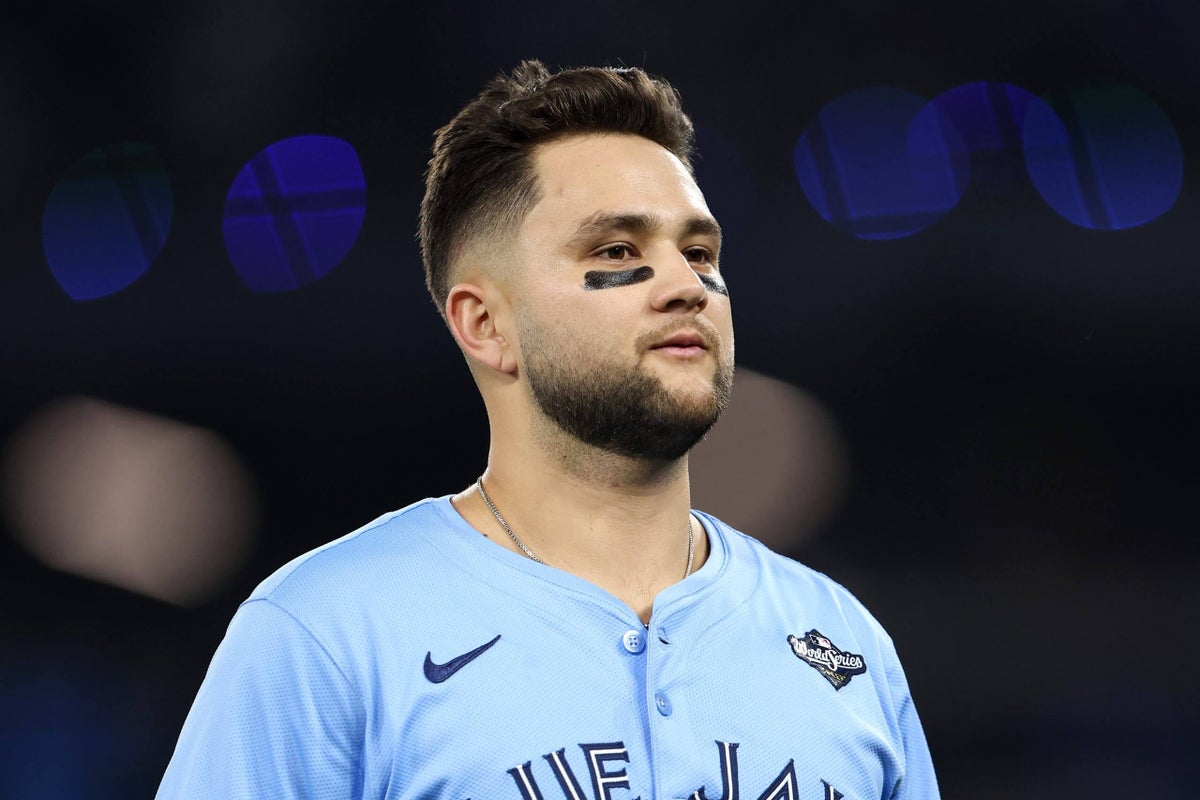
In Bo Bichette, the Phillies saw an unexpected opportunity to re-energize their lineup and fan base, even if it required a higher-than-ever payroll and significant roster reshuffling to accommodate the 27-year-old infielder. They did not consider Bichette a possibility until a few weeks ago, discovered a mutual interest after a virtual meeting earlier this week, and then might have offered him more guaranteed dollars and years than any other team did.
So if it feels like a categorical failure that Bichette agreed to sign Friday with the New York Mets for a contract that makes him the fourth-highest paid player in the sport by 2026 salary, maybe it depends on the perspective. The Phillies were excited about the idea of Bichette and believed they had made a compelling case. But they had their limits and watched as Bichette pivoted when a desperate Mets team, spurned by Kyle Tucker, soared past them.
Now what?
It’s a cold reality the Phillies face in mid-January. Outside of Bichette, who was one of the youngest and best free agents available this winter, the paths to a similar type of splash are all but nonexistent. After Bichette’s decision, the Phillies quickly reached an agreement with J.T. Realmuto on a three-year, $45 million deal, league sources said. They could still shuffle their infield by trading third baseman Alec Bohm, but that is unlikely. The Phillies were willing to readjust everything for Bichette, but absent him, they are now unlikely to add a meaningful position player.
Their interest in Bichette was legitimate. The Phillies were offering seven years and somewhere in the range of $190 million to $200 million, multiple league sources told The Athletic. They were not willing to extend a short-term, higher-salary offer to Bichette, those sources said, because of the associated luxury tax penalties. The Phillies would have been taxed 110 percent on almost every dollar of Bichette’s deal. Even a $28 million AAV in 2026 would have cost the Phillies $59 million with taxes.
But the Mets face the same financial penalties. They were more willing to absorb a massive bill in the shorter term. Bichette’s deal is essentially a one-year, $47 million contract for New York. He will make $42 million in 2026 with a $5 million buyout if he exercises an opt-out clause to return to the free-agent market next offseason. The Mets will pay a 110 percent tax on much of Bichette’s deal, making it close to a potential $95 million commitment for that one year.
Maybe there is a world where Tucker signs with the Mets instead of the Los Angeles Dodgers, then Bichette accepts the Phillies’ offer. In that scenario, Los Angeles could have presented a similar short-term, high-AAV structure, like the Mets did, but Bichette’s preference was believed to be for an East Coast team. By the time the dust settled, Phillies officials wondered if their enthusiasm for a long-term deal ever mattered. If Bichette wanted the higher annual salaries and freedom to re-enter the market sooner rather than later, he knew the Mets and Dodgers would be there.
It’s rare for the Phillies to miss on a big-name target under Dave Dombrowski, the club’s veteran president of baseball operations. The Dodgers and Mets are probably the only two clubs in Major League Baseball with more financial might than the Phillies, but they haven’t always targeted the same players in an offseason. In the end, the Phillies were hamstrung by two of Dombrowski’s previous deals — the $38 million combined owed to Nick Castellanos and Taijuan Walker in 2026.
Castellanos will be traded or released before spring training begins, team sources have said, and the Phillies will have to eat a majority (if not all) of his $20 million. Walker projects as the team’s sixth or seventh starter this season, the final year of his four-year, $72 million deal. The Phillies are lacking rotation depth, which makes Walker relevant, but that money could have been used toward a more important player.
Both contracts come off the books next offseason, while the club’s tax penalties could be reset with a new collective bargaining agreement. Those factors weren’t enough to compel the Phillies into a higher-salary, shorter-term offer. Even then, they are not certain whether Bichette would have chosen them. The Mets could have come in even higher; they offered Tucker $220 million over four years, league sources told The Athletic’s Will Sammon.
So, with 26 days until pitchers and catchers, the Phillies are back to where they were. This is how they envisioned the offseason — a reunion with Kyle Schwarber and Realmuto, a Band-Aid applied to the outfield, and some bullpen fortifications. Without Bichette, the Phillies must hope that a spark comes from within, via contributions from top prospects Andrew Painter, Justin Crawford and Aidan Miller. Painter and Crawford could both be on the Opening Day roster. The path for Miller to arrive is cleared now; if there is injury or ineffectiveness on the infield, Miller could have a chance in the summer.
The Phillies can still improve, if they wish. They could seek a better right-handed platoon partner for Brandon Marsh in left field. They could add better rotation depth. But none of those transactions will be large-scale ones.
Two-thirds of the outfield and half of the bullpen will look different in 2026, but the Phillies will not beat the criticisms that they are running back a roster that fell short, again, last season. The Phillies liked their team in 2025, a point they are sure to reaffirm in the next 26 days and throughout camp. They played a tight postseason series with the Dodgers. It was not enough. Everyone is a year older. And they will still enter the season as favorites to win the National League East as well as one of the top contenders for a World Series.
It just feels so elusive in mid-January when the wind chill is 23 degrees and a division rival one-upped you.