

While Kyle Schwarber (five years, $150 million) and Edwin Díaz (three years, $69 million) agreed to record-breaking free-agent deals a few minutes apart on Dec. 8, mega-agent Scott Boras held court with dozens of reporters at baseball’s Winter Meetings in Orlando, Fla.
Boras, who does not represent Schwarber nor Díaz, discussed his own free-agent group, which includes third baseman Alex Bregman, pitcher Ranger Suárez and first baseman Pete Alonso, who days later would go on to sign a five-year, $155 million deal with the Baltimore Orioles. Later in the day, Boras sat next to client Dylan Cease as the pitcher was formally introduced by the Toronto Blue Jays after inking a seven-year, $210 million deal, the largest free-agent contract in Toronto history.
This offseason, there may not be any deals coming that exceed the ones signed by Shohei Ohtani (10 years, $700 million) and Juan Soto (15 years, $765 million), but the money flowing in free agency is an indication that the baseball business is good. For how long is anyone’s guess.
Last month, multiple general managers said they weren’t approaching this winter any differently despite the collective bargaining agreement between owners and players entering its final year. Negotiations on a new CBA could be contentious. Both sides want to challenge the current system; owners believe free-agent salaries have gotten out of control, and the MLB players union — considered the strongest in all professional sports — wants to challenge certain teams to spend more.
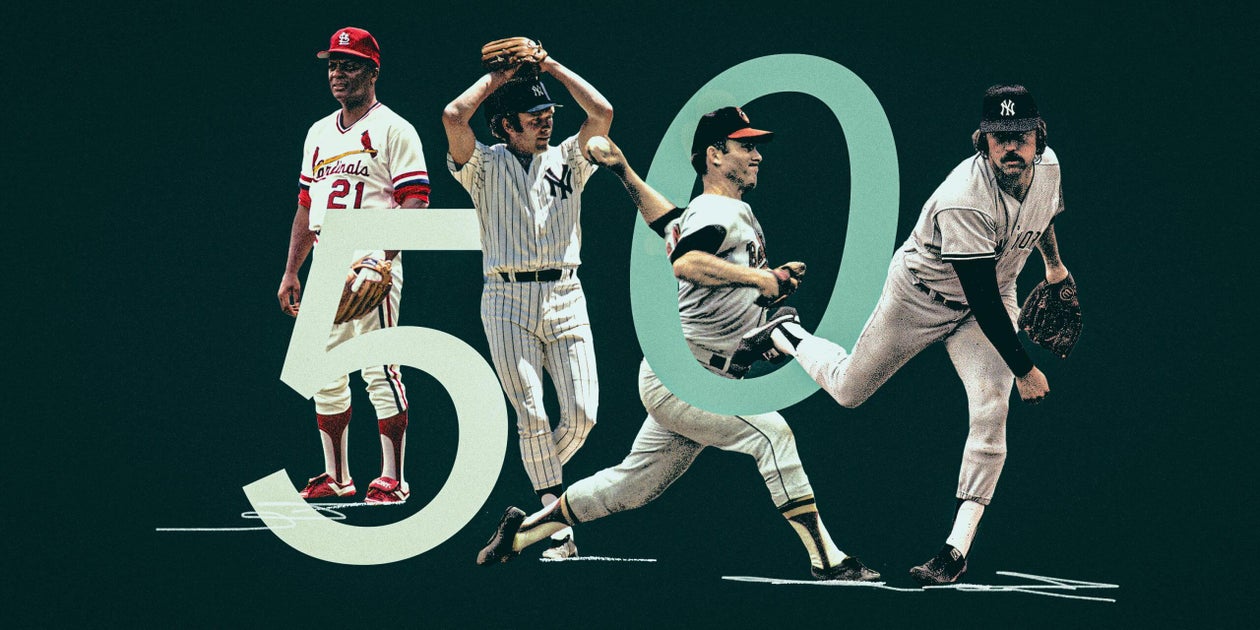
It’s a story that’s been going on for 50 years, ever since arbitrator Peter Seitz’s landmark decision birthed free agency as we know it, forever changing the sport’s labor economics and tilting its power structure.
On Dec. 23, 1975, Seitz ruled in favor of pitchers Andy Messersmith and Dave McNally, both of whom filed grievances claiming that they should not be held to the sport’s antiquated standard reserve clause, which automatically extended a player’s contract for an additional year unless the player was released, retired or traded — effectively binding a player to one team and removing his ability to negotiate with other clubs. The 1976 CBA, finalized in July after a brief March lockout, included a provision for free agency after six years of MLB service time.
“There was no question it was disruptive and historic,” said former big leaguer Phil Garner, who was part of the player negotiating team. “It was some exciting times and some scary times. Guys knew what was at stake. We were trying to do something that had never been done before: dismantle the whole system.”
Before the Seitz decision, there was outfielder Curt Flood, who, after being traded from the St. Louis Cardinals to the Philadelphia Phillies following the 1969 season, filed an antitrust suit after then-commissioner Bowie Kuhn rejected his request to become a free agent.
“After 12 years in the major leagues, I do not feel that I am a piece of property to be bought and sold irrespective of my wishes,” Flood wrote in a letter to Kuhn at the time.
Flood lost his case in the Supreme Court. No active player testified on his behalf, fearing future retaliation from owners.
“He kicked the door open for players protecting themselves and making sure they were treated in a reasonable, honorable manner,” his widow, Judy Pace Flood, said. “And it cost him dearly.”
In the 1970 CBA, under former union head Marvin Miller’s guidance, the players bargained for the right to have an impartial arbitrator to hear grievances, an important step that removed the conflicts from the legal system. Three years later — after a 17-day spring training lockout — a salary arbitration system was agreed upon that raised the salaries of players with a certain amount of service time. Miller would later say the marriage of arbitration and free agency changed the sport’s economics.
“It was so hard to get money then because you had no alternative. When I hurt my arm, they cut my salary,” said Hall of Famer Jim Palmer, who spent his entire 19-year career with the Orioles. “Everything was a struggle then. You had to beg, you had to get on your knees and grovel to be treated fairly.”
Indeed, when Palmer was in the minor leagues, he lied about his wife being pregnant to get an extra $100 a month.
In November 1974, Jim “Catfish” Hunter became the sport’s first free agent when he won his arbitration case against Oakland Athletics owner Charles Finley. In that case, Hunter claimed Finley had breached his contract by failing to pay $50,000, half of Hunter’s salary, into an annuity fund. Seitz, the neutral arbitrator in this case, ruled with Hunter, who went on to sign the first multimillion-dollar deal in baseball history, a five-year contract with the New York Yankees worth $3.25 million.
“I regard that as the seminal case,” said Donald Fehr, who assisted on the Messersmith-McNally case as a young lawyer and later served as the executive director for both the MLB and NHL players unions. “After Hunter, all players understood the magnitude of the restraints.”
Still, baseball players feared for their careers. Hunter was one of the best pitchers in the game; of course, he wasn’t going to be blackballed. But what about everyone else?
Messersmith was the first to wade into uncharted territory. After the Los Angeles Dodgers refused to include a no-trade clause in his 1975 contract, he refused to sign and instead played under a renewed contract. The union filed a grievance.
Miller then approached McNally, who was playing for the Montreal Expos without a contract and had sat out a good chunk of the season with a sore arm, to join the grievance. McNally knew he was going to retire, but he wanted to make things better for the younger players.
“That’s the kind of guy Dave was,” said Palmer, who played with McNally in Baltimore. “Dave was a man of high principle. He had a very positive stubbornness to him, and he knew baseball needed to do what he was going to be part of.”
Despite pressure from their owners and significant sums of money being offered to both players, McNally and Messersmith moved forward with the grievance. And after presenting their cases to a three-person panel that included Seitz, Miller and labor lawyer John Gaherin representing the owners, the players won. Seitz ruled both players were bound to their teams for only one year, not perpetuity.
The reaction from the league was visceral. Seitz was fired from the arbitrator panel. Kuhn said the decision was a disaster for “the great majority of the players, for the clubs and most of all for the fans. It is just inconceivable that after nearly 100 years of developing this system for the overall good of the game, it should be obliterated in this way.”
Fehr still remembers getting the call from union counsel Richard Moss the night of Dec. 23, 1975, saying they had won, but the owners were going to take the decision to court.
“We thought even if Seitz sided with us, some congressman was going to come in and say, ‘That’s baloney, we got to go back to the right way,’” Garner said. “Baseball was a favorite of Congress; they already had the anti-trust (exemption). Hopeful is the right word. We were hoping.”
Seitz’s decision was upheld in federal district and appeals courts, the latter of which occurred during a lockout in spring 1976. McNally and Messersmith were free agents, but what about everyone else?
“This was not fun and games. I had saved up a year’s worth of salary, I thought we might lose a whole season,” Garner said of the 1976 negotiations, which prompted him to sell his car in favor of an older model.

The advent of MLB free agency was both “disruptive and historic,” former player and manager Phil Garner said. “It was some exciting times and some scary times.” (Stephen Dunn / Getty Images)
In mid-March, Kuhn called off the lockout, not wanting to miss any regular-season games. The players agreed to start the season without a new CBA in place. Owners knew the reserve clause system was over. The question was: How would free agency work?
The owners first proposed a 10-year wait for free agency, which the union shot down, seeing little difference between that and the lifetime bind of the reserve clause. Finley, the A’s owner, wanted free agency every year, a proposition that would have flooded the market every winter and thus depressed player salaries, but one that didn’t gain much traction from the other owners.
Miller and union leadership were OK with setting a higher bar for free agency. They figured that by only allowing a few players to become free agents every year, scarcity would create bidding among teams and drive up salaries. They were right.
“We were scared to death they were going to listen to Finley because he had it right (to depress salaries),” Garner said. “But the owners were so fixated on controlling us, they sold their souls to the devil to control the contract. We agreed to (a) six-year free agency (system), with the caveat that we had arbitration.”
They reached an agreement on the eve of the All-Star Game in July, and it was ratified by the players in August. Some of the first free agents that winter included future Hall of Famers Reggie Jackson and Rollie Fingers. In total, 25 free agents made $25 million that first year, led by Jackson’s $2.9 million salary for the eventual World Series-champion Yankees.
Despite Kuhn’s sentiment that the game would suffer, fans came out in record numbers in 1977. MLB set a new season attendance record (38.7 million), and as they watched the Yankees and their high-priced stars win it all, fans seemed excited by the possibility that their team was one or two free agents away from greatness.
For players, the impact on salaries was immediate, and it wasn’t just one or two stars.
“It was like turning on a fire hose and trying to drink from it,” said Steve Rogers, who negotiated a three-year, $240,000 deal with Montreal heading into 1977. A year later, players similar to him were signing deals worth $1 million. Gene Tenace, a catcher/first baseman who was part of the first free agent group, saw his yearly salary go from roughly $50,000 to a six-year, seven-figure pact.
“Gene was going around singing, ‘If I were a rich man,’ after that,” Garner said. “It was indicative of the surprise of guys who were all of sudden making double now. It turned out very quickly to be a better deal for all players. No one knew what the outcome was going to be; we just wanted a system where we could make a choice.”
Free agency isn’t going anywhere. But the ability for MLB teams to spend unlimited amounts on free agents could be.
The Dodgers, this year’s World Series champions, spent more than $400 million on their payroll and luxury tax bill as they exceeded every potential payroll threshold. Five teams failed to clear $100 million, including the Miami Marlins, Pittsburgh Pirates, Tampa Bay Rays and Athletics, each of which has been the subject of grievances from the MLB Players Association regarding how they spend revenue-sharing dollars obtained from bigger-market teams.
Colorado Rockies owner Dick Monfort told the Denver Post this spring that the sport’s competitive imbalance has become “ludicrous” and “the only way to fix baseball is to do a salary floor and a cap.” David Rubenstein, who led a group to buy the Orioles for $1.725 billion in 2024, has gone on record about his desire for a cap. Even Yankees owner Hal Steinbrenner — whose club has one of the highest valuations in the sport at more than $8 billion, per Sportico — has expressed concern over the Dodgers pulling away from the rest of the league. Steinbrenner’s club spent more than $300 million on payroll in 2025, and he said “it wouldn’t be fair or accurate” to assume the Yankees turned a profit.
It’s impossible to tell if Steinbrenner or the other owners are in financial jeopardy. For as long as baseball has existed, owners have tried to suppress payrolls. Despite a down season where the team missed the playoffs, the Atlanta Braves, who are a public company, had revenue topping $600 million for the first time, according to Sportico.
Phillies star Bryce Harper got into a heated altercation with commissioner Rob Manfred during an in-season clubhouse visit when talk of a salary cap came up. Dodgers manager Dave Roberts, a former player himself, said recently he would support a salary cap if there were a salary floor. Tony Clark, the executive director of the players’ union and a former player himself, has called a cap “institutionalized collusion” and said the union will never agree to it. If the owners try to take a hard line, many in the sport fear the possibility of a long, bitter work stoppage in 2027.
Manfred, speaking to reporters at this year’s All-Star Game, said he hasn’t used the term salary cap in talking to players.
“What I do say to them is in addressing this competitive issue that’s real, we should think about is this system the perfect system from a player’s perspective,” Manfred said. “And my only goal there is to not convince them of one system or another, but to convince them that everybody is going to the table with an open mind to try to address a problem that’s fan-driven and leads to a better collective bargaining process and a better outcome.”
Clark, in a statement to The Athletic, made it clear where he stood on free agency.
“As ballplayers, we owe Curt Flood, Andy Messersmith, and Dave McNally a debt that can never be truly repaid,” Clark said. “For all those who paved the way and were committed to leaving the game better than they found it, it is imperative that we continue to protect and advance the rights that have been won and do so in support of all those who come next.”
Some involved 50 years ago marvel at where free-agent salaries have gone. Pace Flood said her husband would have been proud. Others aren’t so sure.
“Flood, McNally, Messersmith — these guys were considered pariahs after that. The whole climate then was the players are screwing up, they’re making a big mistake, you can’t demand more money, they are paid a lot of money,” Garner said. “We weren’t demanding more money. We demanded a different system. And now what the owners need is a system to protect themselves, and they don’t have it.”
Whatever happens during negotiations over the next year-plus could reshape the sport forever.