

If there is a theme to my Hall of Fame ballot this year, it’s that I no longer am penalizing players for things they did not accomplish, through little or no fault of their own.
I think I’ve gotten it wrong on certain players by dwelling on their lack of longevity rather than the glory of their peaks. I think we, the voting members of the Baseball Writers’ Association of America, have gotten it wrong, too.
Longevity will always be a key attribute for some candidates. Ten-year dominance is still the first thing I look for in a Hall of Famer. But as I wrote in December, certain players, pitchers in particular, do not last as long as they once did. As performance standards change, voters need to recalibrate.
My first-time votes included two players whose careers ended prematurely due to injury (Dustin Pedroia and David Wright), another whose decline was perhaps attributable to overuse (Félix Hernández) and a fourth (Mark Buehrle) who had a similar career to another candidate I finally deemed worthy, only without the postseason opportunity.
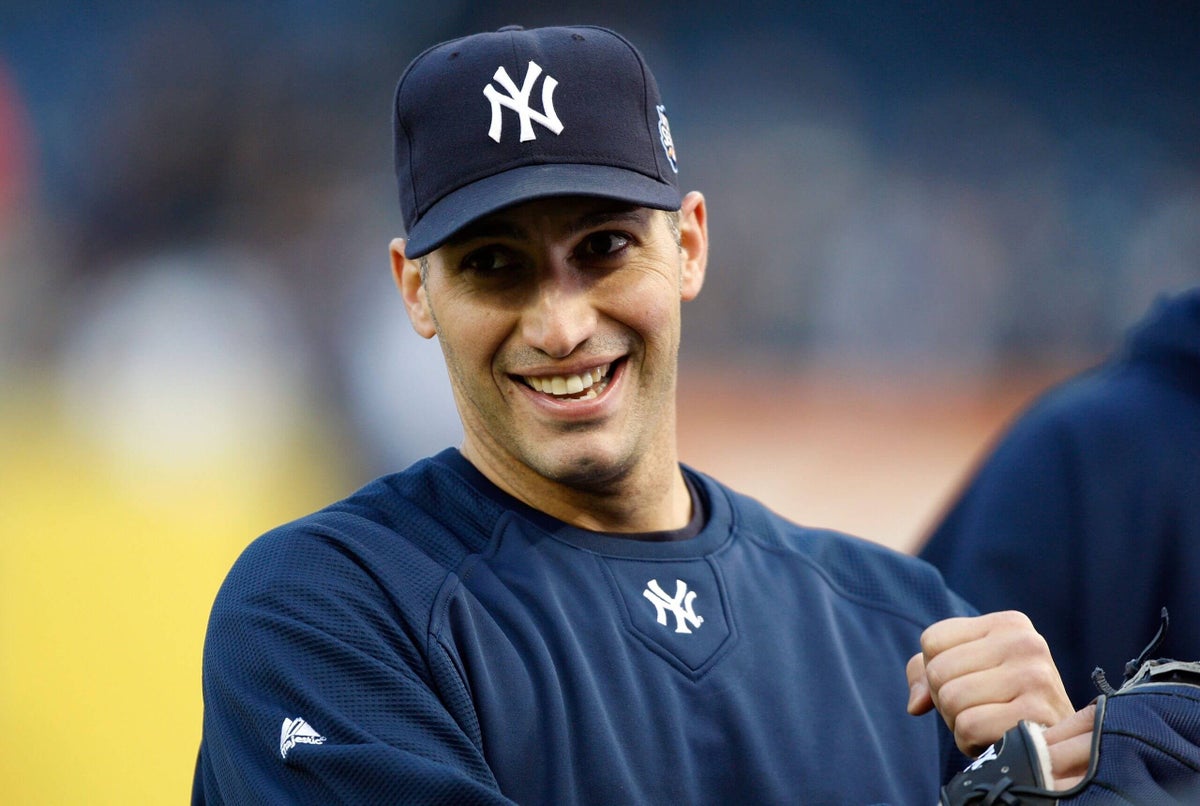
Once I relented on Andy Pettitte, whom I snubbed in his previous seven appearances on the ballot, I found it difficult to exclude Buehrle. And once I included Buehrle along with Hernández and Pettitte, I found it difficult to exclude Cole Hamels, making his first appearance on the ballot.
My holdover selections were Carlos Beltrán, Andruw Jones, Jimmy Rollins and Chase Utley.
Yes, I voted for the maximum 10 players, and yes, I continued to exclude Manny Ramirez and Alex Rodriguez, both of whom were suspended after Major League Baseball established firm rules and penalties for using performance-enhancing drugs. That is my line — I have voted for Pettitte and others who were suspected or confirmed to have used PEDs before the league set clear boundaries — and I know not everyone agrees with it.
I know not everyone will agree with my selections, either. I was torn on a number of them myself. Every year when I place my ballot in the mailbox — yes, we still do it by mail! — I feel a lingering sense of dissatisfaction. Many voters do. You’re just never quite sure if you’ve got it right.
The one thing I try to do is remain flexible in my thinking, adapting as standards evolve, allowing for new perspectives. A player’s statistics do not change in the five years he must wait after retirement to become eligible for the Hall, or the maximum 10 years he can remain on the ballot. But for a variety of reasons, our appreciation of a player might.
Electing candidates with shorter peaks is something of a slippery slope, creating arguments for others with similar statistical profiles. Well, voters will need to do what they always do, and go case by case. As Jayson Stark has written, the likely election of Buster Posey next year will force a reckoning. Posey finished with 1,500 career hits. The last player elected by the writers with fewer than 2,000 hits was Ralph Kiner in 1975.
Jones (1,933 hits), Utley (1,885), Pedroia (1,805) and Wright (1,777) are all sub-2,000 candidates. But Jones was the best defensive center fielder of his generation and finished with 434 home runs. Utley was second only to Albert Pujols in bWAR from 2005 to 2014 (h/t Jayson) and was regarded as almost a model player for his combination of instincts, savvy and competitive fire.
Pedroia was a Rookie of the Year, four-time Gold Glove winner and two-time World Series champion. Wright finished with a career OPS-plus of 33 percent above league average, well above recent third-base inductees Scott Rolen (22 percent above) and Adrian Beltré (16 percent). He might not have been as strong defensively as those two, but he stole more bases and did win two Gold Gloves.
In voting for such players, I now regret omitting past candidates who, with the increasing emphasis on peak performance, perhaps would receive greater consideration today. Don Mattingly and Dale Murphy, both of whom finished with fewer than 2,200 career hits, are two such players, and not the only ones. Era Committees exist to correct our oversights, but both Mattingly and Murphy fell short in the most recent election.
The beauty of the Hall of Fame process is that fans, writers and baseball people all have their own views on what makes a player worthy of Cooperstown. The inclusion of players who had shorter careers will only fuel new debates, creating additional “what about” discussions for position players and pitchers alike.
We might see another player reach 3,000 hits (Freddie Freeman, 36, is the active leader with 2,431). We almost certainly will see another player reach 500 homers (Giancarlo Stanton, 36, is the active leader at 453). But we’ve probably seen the last 300-game winner, not that the more analytically inclined care much for that standard. Justin Verlander, 42, might be the last 250-game winner. He currently is at 266.
So, what do we do? Ignore the current and future generations of starting pitchers? As things stand, the writers have elected only three starters since 2015. From the current era, Verlander, Max Scherzer, Clayton Kershaw and perhaps Zack Greinke are likely Hall of Famers. But none is eligible until at least 2029.
As Travis Sawchik pointed out two years ago, induction rates in the BBWAA voter have dropped each decade since the 1950s. The writers need to elect more players in general, and with pitchers, they cannot simply restrict their selections to obvious first-ballot choices. Last year’s election of CC Sabathia, who was not as obvious a first-ballot pick as Verlander, Scherzer and Kershaw, was a positive step.
A year ago, I voted for Sabathia but not Pettitte and was conflicted about it, knowing their career statistics in some categories were nearly identical. The overwhelming support Sabathia received — 86.8 percent of the vote, far above the 75 percent required for induction — convinced me I was too hard on Pettitte. Sabathia was more dominant and accomplished. But not that much better.
One thing that made me hesitant on Pettitte was that he never won a Cy Young, never was considered the best pitcher in his league. His highest Cy finish was second in 1996, at a time when voters placed greater value on wins, and Pettitte finished with 21. Buehrle fared even worse in Cy Young voting, finishing in the top 10 only once, fifth in 2005. So, how could I justify a vote for him?
Well, Buehrle threw almost the same number of innings as Pettitte, produced the same ERA-plus and virtually the same bWAR. He also won four Gold Gloves to Pettitte’s none. The primary difference, then, was Pettitte’s greater opportunity in October. His 276 2/3 innings, in an era with a greater number of playoff rounds, are a record. His 12 starts in postseason clinchers are the most in postseason history, and his teams won eight of those games.
Buehrle pitched only 30 1/3 innings in the postseason, including his contribution in the Chicago White Sox’s run to the 2005 World Series title. A dissenter might argue that Pettitte’s performance in October put his borderline case for Cooperstown over the top, and that Buehrle’s overall resume simply isn’t as impressive. Fair point. But how much should Buehrle be held responsible for his team’s failings?
Another reason I’m bullish on Buehrle as well as Pettitte: Both built distinguished careers while throwing more than 3,000 innings. Verlander also has reached that total. Scherzer is 37 innings short. Kershaw finished 144 2/3 innings shy. Once Verlander and Scherzer retire, it’s highly doubtful any pitcher will reach that milestone again.
Hamels finished with nearly 2,700 innings, and I’ll admit — I never considered him Hall of Fame material while he was playing. But in reviewing his career, here’s the thing that caught my attention: His career-ERA-plus, 23 percent above league average, would be the 10th highest by a Hall of Fame left-hander. Ahead of Tom Glavine. Ahead of Sabathia. Ahead of Steve Carlton.
True, Hamels never finished higher than fifth in a Cy Young vote and was in the top 10 only four times. But his career ERA in 100 1/3 postseason innings was 3.41, and for the 2008 Philadelphia Phillies, he won both the National League Championship Series MVP and World Series MVP. Classic example of a pitcher whose career was better than I initially thought.
Hernández, on the other hand, is the type of candidate that will become more prevalent in the future. His performance crumbled after age 30. His career was over by age 33. Perhaps if the Seattle Mariners had not overloaded him with more than 230 innings in four straight seasons and five out of six, he would have attained greater longevity.
For nine seasons, though, Hernández was as good a pitcher as any, winning a Cy Young, finishing second twice and fourth once and placing in the top 10 two other times. His ERA-plus in that span was fifth highest in the majors, behind Kershaw, Adam Wainwright, Greinke and Roy Halladay. And Hernández threw 226 2/3 innings more than any of them, a full season’s worth and then some.
I won’t pretend my ballot is perfect. I don’t know that any ballot is perfect. I’ll spend the next year pondering whether I need to get over my aversion to Bobby Abreu, a favorite of statistical analysts, but a guy whose departure in a trade to the New York Yankees helped elevate the Phillies. I’ll think a lot about Torii Hunter, whose candidacy might benefit from the election of Jones, but is still not as strong as that of Jim Edmonds, who lasted only one year on the ballot. And I’ll try to decide if Jon Lester, making his first appearance on the ballot, belongs in the Pettitte/Buehrle category.
Every year is different. Every ballot stands on its own.