

Wyatt Earp and his crew did not bring butter knives to the O.K. Corral for their showdown against the Clanton-McLaury gang. If you play in a fantasy football league that requires you to start three wide receivers every week, and you load up at other positions and cut corners at the WR position, you’re bringing inadequate hardware to the fight.
It’s imperative to take league settings into consideration when mapping out a wide receiver strategy.
The most important setting is the number of wide receivers you have to start each week.
If you’re only required to start two wide receivers each week, it’s acceptable to spend considerable early-round draft capital at running back and take your foot off the gas at wide receiver. It’s fine to merely keep pace with your competitors at the WR position as long as you’re building positional advantages elsewhere.
But if you’re required to start three receivers, it only makes sense to invest heavily in the WR position.
Wide receiver is a crucial position in 3WR leagues simply because receivers make up such a large percentage of your starting lineup. If your league requires you to start 1 QB, 2 RBs, 3 WRs, 1 TE and 1 FLEX, at least 37.5% of your non-defense, non-kicker starters will be WRs. That percentage jumps to 50% if you put a WR in the flex spot.
When you’re drafting in a 3WR league, your goal should be to overwhelm your competitors with superior firepower at wide receiver. Ideally, your fourth receiver will be better than everyone else’s third receiver – and perhaps better than some people’s second receiver.
When I draft in 3WR leagues, at least three of my first five draft picks are wide receivers. Often, four of my first six picks are receivers.
The scoring system is another important consideration.
Full-point PPR leagues tend to drive up the overall value of wide receivers – especially high-volume receivers. Non-PPR leagues reduce the overall value of receivers and boost the value of lower-volume, big-play receivers (such as Jameson Williams or Alec Pierce) while diminishing the value of higher-volume receivers with lower yards-per-catch averages (such as Rashee Rice or Wan’Dale Robinson).
Fantasy Football Draft Strategy: Wide Receivers
Wide Receiver Isn’t Deep
I often hear fantasy football gamers say that the WR position is deep.
It’s deep in that there are a lot of receivers who play ample snaps – at least compared with the number of running backs who play ample snaps.
But we want receivers who do more than just run a lot of routes. We want receivers who actually catch a lot of passes, pile up yardage, and score touchdowns. We want receivers who score a significant number of fantasy points.
Last season, there were 30 running backs who played at least six games and averaged 10 or more half-point PPR fantasy points per game.
There were only 26 wide receivers who played at least six games and averaged 10 or more half-point PPR fantasy points per game.
The number of receivers who reliably deliver significant point totals is smaller than some fantasy managers think, and that number is shrinking.
In 2024, there were 34 wide receivers who drew at least 100 targets. In 2025, only 28 wide receivers drew at least 100 targets.
In 2024, there were 21 wide receivers who had 1,000 or more receiving yards. In 2025, there were 19 wide receivers who drew at least 100 targets.
The Tight End Effect
NFL teams are using multiple-TE sets more often.
In 2024, NFL offenses collectively used 12 personnel (one RB and two TEs on the field) on 24.3% of offensive snaps, according to PFF. That was the highest rate of 12 personnel usage since 2007.
The Rams used 13 personnel (with one RB and three TEs on the field) on 30.5% of their offensive snaps last season. The Rams led the NFL in yards per play (6.1), yards per game (394.6), and points per game (30.5) last season.
The NFL has long been a copycat league, so it wasn’t surprising that NFL teams gorged themselves on tight ends in this year’s draft. There were nine TEs drafted in the first three rounds of this year’s draft, and 17 TEs drafted in the first five rounds.
For sake of comparison, there were only three RBs drafted in the first three rounds, and eight RBs drafted in the first five rounds.
Greater usage of two- and three-TE sets means reduced usage of three- and four-receiver sets. That means fewer WRs will see a significant number of targets.
But the extra tight ends on the field aren’t stealing targets from wide receivers. When a team uses 12 personnel, one of those tight ends is usually a blocking specialist who rarely catches passes.
So, for the teams that use a lot of 12 and 13 personnel, the targets are concentrated among fewer receivers.
The receivers who stay on the field when their offenses use multiple tight ends are potentially valuable because they’ll face reduced target competition from the other WRs on their team.
If the use of multi-TE sets continues to trend upward, fewer wide receivers will contribute worthwhile fantasy football numbers, but a small number of receivers will be positioned to command a big share of team targets.
In other words, there will be even more incentive for fantasy gamers to take wide receivers early in their drafts.
Waiver Wire Is Sparse on WRs
One more reason not to scrimp on wide receivers in your draft: It’s hard to find quality wide receivers on waivers.
At running back, there are a handful of players who go undrafted in most fantasy leagues but become highly sought-after assets because they suddenly inherit substantial playing time due to another player’s injury or ineffectiveness.
At wide receiver, it’s rare for a substantial contributor to fall through the cracks and go undrafted.
The most coveted WRs on waivers in any given week are often players coming off spike games. Usually, spike games are one-offs, and that player’s numbers fall back to earth the following week.
Don’t let yourself get into a spot where you’re trying to patch a hole at wide receiver through waivers. You’ll find yourself futilely chasing last week’s points.
If you want to ensure high-quality production from your wide receivers, you need to pay up in your draft.
Fantasy Football Targets & Avoids
Here are some of the wide receivers I’m targeting and avoiding:
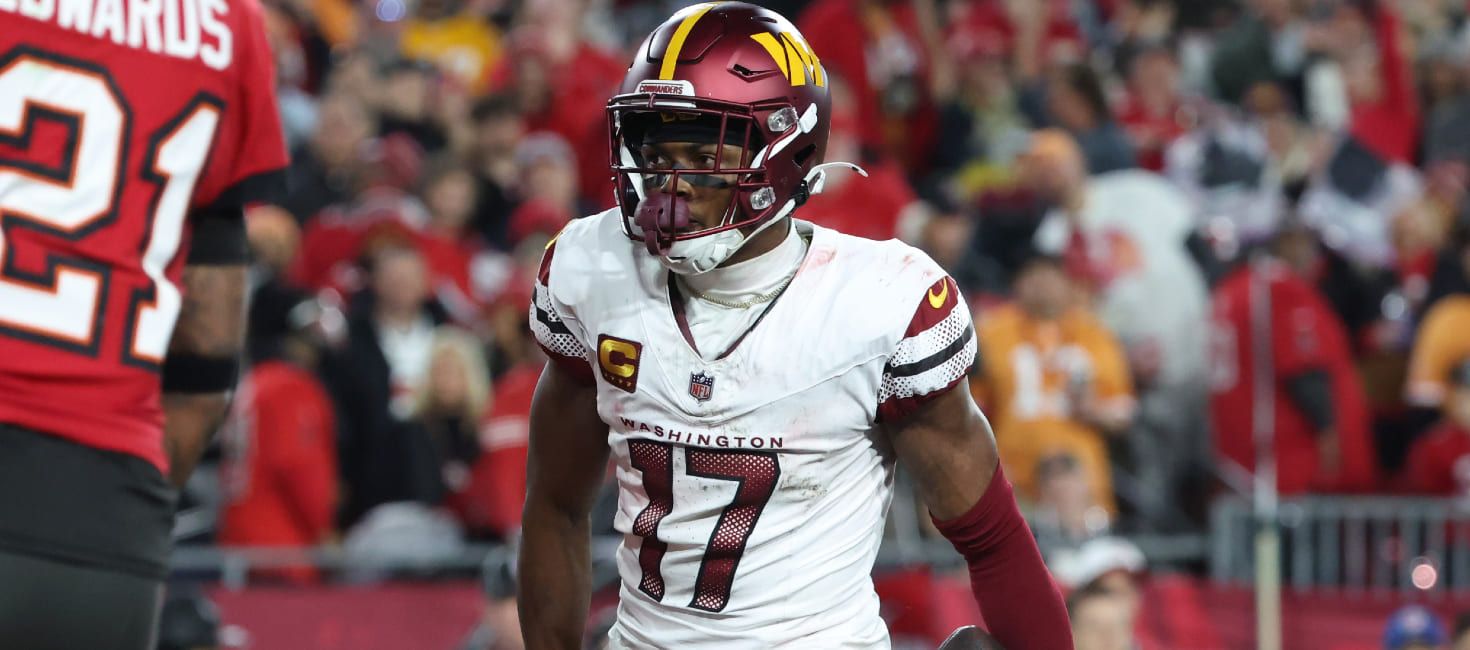
Target: Terry McLaurin (WAS)
McLaurin turned in five consecutive 1,000-yard seasons from 2020 through 2024, averaging 80.4 catches, 1,092 receiving yards and 6.2 touchdowns a year over that stretch. In the last of those seasons, McLaurin paired splendidly with rookie QB Jayden Daniels and finished with 82 catches for 1,096 yards and a career-high 13 touchdowns. He was WR6 in half-point PPR scoring in 2024.
McLaurin missed seven games with a quad injury last season, and Daniels missed 10 games. Both players are healthy, and McLaurin is poised to command a big target share. David Blough, the Commanders’ new offensive coordinator, has said he wants to find a way to get McLaurin 10 targets a game.
Avoid: Rashee Rice (KC)
Last August, Rice was available at a discount in fantasy football drafts because he had been suspended for the first six games of the season. There’s no discount this year. Rice has a mid-third-round ADP.
The suspension stemmed from Rice’s role in a high-speed street-racing incident in 2024 that caused a multi-car crash and resulted in injuries. After pleading guilty to felony charges and being given probation, Rice violated the terms of his probation this spring by testing positive for marijuana and was ordered to serve 30 days in jail. He’d just had cleanup surgery on his knee and had to do his rehabbing in a Texas jail.
Rice has averaged 6.4 catches and 71.6 receiving yards per game over the last two seasons, with eight touchdowns in 12 regular-season games. He’s a PPR machine when healthy.
But there is considerable character and injury risk here. I don’t think we’re getting enough of a discount to justify the risk.
Target: Emeka Egbuka (TB)
Egbuka was a first-round draft pick last year and generated buzz throughout his first NFL training camp. Then he got off to a torrid regular-season start, with 25 catches for 445 yards and five touchdowns in his first five games. Egbuka was WR3 in half-point PPR scoring through Week 5.
Then, Egbuka tweaked his hamstring in Week 6. He played through it, but his numbers took a nosedive. Over those first five weeks, Egbuka caught 65.8% of his targets and averaged 11.7 yards per target. From Week 6 on, he caught 42.7% of his targets and averaged 5.5 yards per target.
The hamstring injury is a plausible explanation for why Egbuka’s rookie season went sour. I can’t forget how good he looked in those first five weeks. And now, with Mike Evans having left Tampa for San Francisco, Egbuka figures to be the Buccaneers’ No. 1 receiver.
Avoid: Davante Adams (LAR)
Adams had a league-high 14 TD catches last season. He scored a touchdown on 23.3% of his catches and 12.3% of his targets. That sort of TD production simply isn’t sustainable.
The Adams averaged 4.3 catches and 56.4 receiving yards per game in 2025 – his lowest totals in those two categories since 2015.
Adams is 33, and he plays with one of the biggest target hogs in the league, Puka Nacua.
Target: Christian Watson (GB)
Watson’s injury history will present you with a discount during drafts. He’s missed 20 games in his four NFL seasons.
But Watson is poised to smash in 2026 if he can stay healthy. Watson missed the early part of the 2025 season while recovering from a torn ACL. Upon his return, he averaged 17.5 yards per catch, 11.1 yards per target and 2.28 yards per route run over 10 regular-season games, producing at a 1,000-yard, 10-TD pace.
The Packers used a four- or five-receiver rotation last year, but with Romeo Doubs and Dontayvion Wicks gone, targets in Green Bay will be consolidated among fewer players.
The 6-4, 2008-pound Watson is a size-speed freak with sub-4.4 wheels. He has the potential to be special.
Avoid: Brian Thomas Jr. (JAC)
Thomas is a former first-round draft pick who had 1,282 receiving yards and 10 touchdowns as a rookie. If the Jaguars use more multiple-TE sets this season – and it seems they will after drafting a pair of tight ends in April – Thomas could benefit since he’s likely to stay on the field when the Jaguars use 12 or 13 personnel.
But Thomas is coming off a disastrous second season in which he had 48 catches for 707 yards and two touchdowns, with an 11% drop rate. His yards per route run fell from 2.45 in his rookie year to 1.45. Thomas dealt with wrist, shoulder and ankle injuries last year, and it’s possible that a season of better health finds him back on track.
It’s also worth noting, however, that in BTJ’s splendid rookie season, he did his best work while backup QB Mac Jones was subbing for the injured Trevor Lawrence. Last year, when Lawrence was on fire down the stretch, averaging 265 yards and throwing 18 TD passes over the final seven games of the regular season, Thomas averaged just 3.0 catches and 47.8 yards per game over that span, and he caught only one of those 18 TD passes.
Thomas will have stiff target competition this year from fellow WRs Jakobi Meyers and Parker Washington, not to mention part-time WR Travis Hunter.
Target: Ricky Pearsall (SF)
A first-round draft pick in 2024, Pearsall has been slow to launch due to injuries, but there have been intriguing flashes.
Pearsall was shot in a robbery attempt in late August of his rookie year, so he played only 11 games and started slowly, but he had 14 catches for 210 yards and two touchdowns in his last two regular-season games.
In 2025, Pearsall topped 100 yards in two of his first three games. Then he injured his PCL in Week 4, didn’t come back until Week 11, and wasn’t himself upon his return. But Pearsall once again flashed late, with 11 catches for 181 yards in his last two regular-season games.
The 49ers’ top wide receiver, Mike Evans, and top tight end, George Kittle, are both entering their age-33 seasons, and Kittle is coming back from a torn Achilles.
Avoid: Chris Godwin
Godwin sustained a gruesome ankle injury in October 2024 that cost him the rest of that season. After the initial surgery, he needed a cleanup procedure and didn’t return until Week 4 of 2025. After two ineffective games, the Buccaneers shut him down and didn’t bring him back until week 12.
Godwin is now 30. In addition to the ankle injury, he tore his ACL earlier in his career.
At the height of his powers, Godwin was a high-volume receiver who had four 1,000-yard seasons. After he came back for the Buccaneers’ last seven games of 2025, Godwin averaged only 5.3 targets, 3.9 catches and 44.0 yards per game. He’s a fade at his eighth-round ADP.

Wide Receiver Rankings & Tiers
Here are the top 50 wide receivers in my redraft fantasy football rankings, sorted into tiers, with thoughts on some of the players from each tier.
Tier 1
Ja’Marr Chase has led the NFL in targets in each of the last two seasons. After racking up 127 catches, 1,708 yards and 17 touchdowns in 2024, Chase *merely* had 125 catches, 1,412 yards and eight touchdowns in 2025. Blame the dip on an injury that cost Bengals QB Joe Burrow nine games. With a healthy Burrow, Chase should once again be unstoppable.
Puka Nacua had a league-high 129 catches for 1,715 yards and 10 touchdowns. He averaged 107.2 receiving yards per game and a ridiculous 3.57 yards per route run. Nacua checked into rehab in the offseason, but there are no concerns about his on-field performance.
Thanks to an outrageous 35.8% target share, Jaxon Smith-Njigba led the NFL with 1,793 receiving yards in 2025, even though the Seahawks were one of the run-heaviest teams in the league. JSN is likely to command a huge target share again in 2026.
Tier 2
There may not be a more consistent player in the game than Amon-Ra St. Brown, who’s had at least 115 catches, 1,263 receiving yards and 10 TD catches in each of the last three seasons.
Justin Jefferson is coming off a disappointing season in which he had 84 catches for 1,048 yards and two touchdowns. The blame can mostly be laid at the feet of young QB JJ McCarthy, who struggled mightily last year. The hope is that Minnesota’s signing of veteran QB Kyler Murray will get Jefferson back on track.
A.J. Brown has topped 1,000 receiving yards in six of his seven NFL seasons. He barely crept past the 1,000-yard mark in 2025 and averaged a career-low 12.9 yards per catch. After being traded to New England, Brown will be paired with the best passer he’s ever played with, young Drake Maye.
Tier 3
Nico Collins is reliably productive when healthy, but he’s missed multiple games in all five of his seasons with the Texans and has missed 22.4% of Houston’s regular-season games since entering the league.
George Pickens is coming off the best season of his four-year career, having caught 93 passes for 1,429 yards and nine touchdowns in his first season with the Cowboys. Teammate CeeDee Lamb missed three games with a high-ankle sprain and may have been less than 100% for some contests. Pickens’ numbers could slip if Lamb is healthier in 2026.
Tier 4
Zay Flowers established career highs in catches (86) and receiving yards (1,211) last year. He’s never scored more than five touchdowns in a season, but Flowers has drawn just 17 red-zone targets over the last two seasons. Perhaps new Ravens offensive coordinator Declan Doyle can scheme up more red-zone looks for Baltimore’s best receiver.
Ladd McConkey could benefit from the arrival of new Chargers offensive coordinator Mike McDaniel. The third-year receiver could also benefit from an anticipated bump in multiple-TE sets for the Chargers, which might mean a higher concentration of targets for McConkey.
A move from Miami to Denver should boost the fantasy value of Jaylen Waddle, especially if the Broncos remain pass-heavy. Denver QB Bo Nix led the NFL in pass attempts last season.
We’ll have to monitor the status of Malik Nabers throughout the summer. Nabers had 109 catches for 1,204 yards and seven touchdowns as a rookie in 2024, but Nabers tore his ACL and meniscus early last season and has been slow to recover.
Tier 5
With since-departed offensive coordinator John Morton calling plays for the Lions last season, Jameson Williams averaged 2.6 catches and 44.4 receiving yards per game. After head coach Dan Campbell took over playcalling duties for Detroit, Williams averaged 4.9 catches and 84.7 receiving yards per game. From Week 10 on, Williams was WR9 in half-point PPR fantasy football scoring, one spot behind teammate Amon-Ra St. Brown.
Luther Burden averaged an impressive 2.34 yards per route run as a rookie and came on strong down the stretch, averaging 5.3 catches and 81.0 receiving yards over his last four regular-season games. DJ Moore’s departure from Chicago should open up target opportunities for Burden.
Alec Pierce averaged 5.6 targets a game last year, and his average depth of target was 18.9 yards. Pierce’s fat new contract with the Colts and WR Michael Pittman Jr.‘s departure from Indianapolis suggest that Pierce will see a lot more targets and run a more diverse route tree in 2026.
Tier 6
This is a crossroads year for Marvin Harrison Jr., the fourth overall pick of the 2024 draft. MHJ has averaged 51.5 receiving yards per game and 1.61 yards per route run over his first two seasons. The hope is that new Cardinals head coach Mike LaFleur can unlock Harrison’s talents. What’s worrisome is that the Cardinals led the NFL in pass attempts last year, and MHJ still didn’t pop.
Parker Washington had 58 catches for 847 yards and five touchdowns last season, but he went nuclear down the stretch, averaging 10.3 targets, 6.5 catches, and 113.5 receiving yards in his final four games, including Jacksonville’s playoff loss to Buffalo. He also had three touchdowns in those four games. Jaguars QB Trevor Lawrence seems to love his slot receivers, and Washington spent a lot of time in the slot last year.
Tier 7
Xavier Worthy dislocated his shoulder in the Chiefs’ 2025 season opener, missed a couple of games, and wasn’t effective upon his return. Rashee Rice‘s presence could keep Worthy from getting enough targets to be a needle-mover. But Worthy was a half-season stud as a rookie when Rice was hurt. Over a 10-game stretch from Week 11 of 2024 through the Super Bowl (minus a Week 18 game in which he played one snap), Worthy produced at a 1,150-yard, 10-touchdown pace. Worthy could be a fantasy football sleeper.
First-round draft pick Matthew Golden had a quiet rookie year in Green Bay, with 44 targets, 29 catches, 361 yards, and zero touchdowns. But there should be greater opportunity for the speedy Golden this year now that Romeo Doubs and Dontayvion Wicks are gone.

Subscribe: YouTube | Spotify | Apple Podcasts | iHeart | Castbox | Amazon Music | Podcast Addict | TuneIn