

The past few NBA transaction cycles have been a helpful reminder of just how unpredictable and, at times, irrational this league can be. No matter how many weeks and months are spent outlining the anticipated roster-building paths teams might take, sometimes Nico Harrison just trades Luka Dončić for Anthony Davis, and all logic seemingly flies out the window.
The 2026 offseason hasn’t gone quite that far, but it’s given us plenty of “wait, they did what?” moments. Stars are moving left and right, and aside from Giannis Antetokounmpo and perhaps Kawhi Leonard (TBD!), not many of them are landing where we expected or for the anticipated price. Even among the role players, we’ve seen plenty of bizarre trades and head-scratching contracts.
So with most of the 2026 offseason now complete, let’s try to rationalize some of these puzzlers. What were these teams thinking when they made these moves?
1. Gary Trent Jr.’s $64M contract with the Bucks
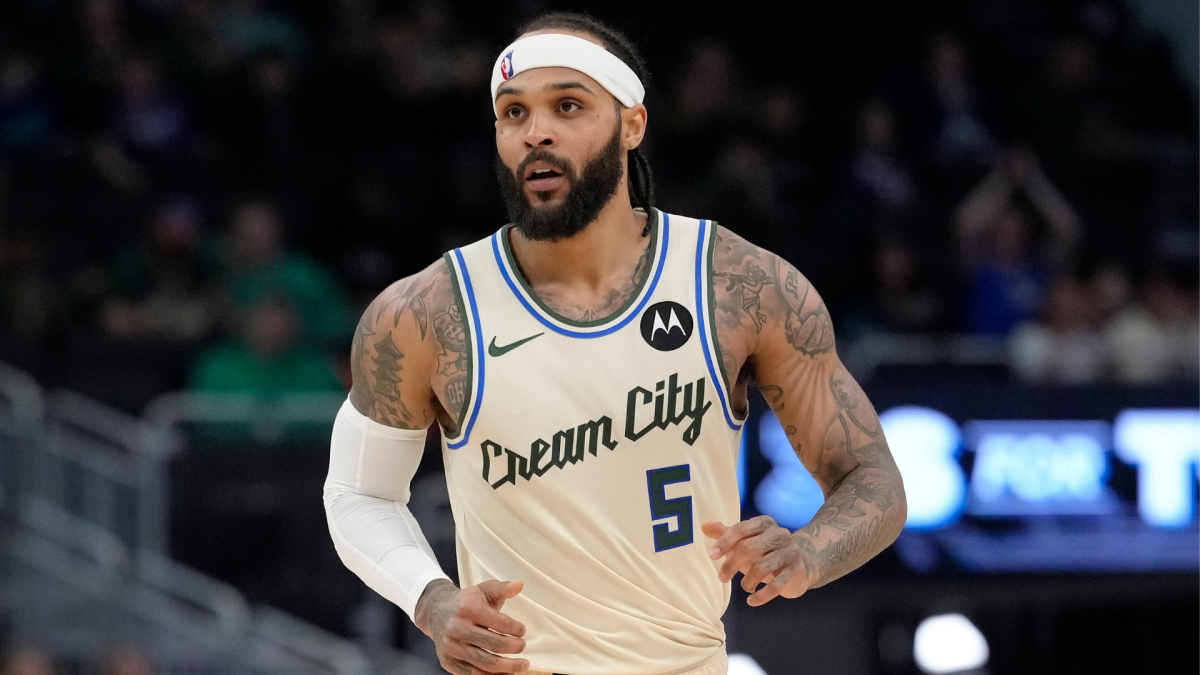
I want to state for the record that I am not accusing the Milwaukee Bucks of cap circumvention. I will, however, suggest that if a team was going to circumvent the salary cap, it would look a lot like what the Bucks just did with Gary Trent Jr. Let’s just lay out what happened, with a hat tip to Grant Afseth of the Dallas Hoop Journal for his excellent timeline:
- In 2024, Gary Trent Jr. had just come off of a three-year, $51.8 million contract with the Toronto Raptors. The Raptors were at one point reportedly willing to offer him a deal worth $15 million per year, but he reportedly wanted $25 million annually. Toronto eventually removed its offer.
- Trent’s market dried up after that, but was still above the minimum. Multiple teams reportedly were willing to pay Trent the taxpayer mid-level exception worth $5.2 million. Instead, Trent took a one-year minimum at $2.6 million to reunite with former teammate Damian Lillard in Milwaukee. As the Bucks were deep into the luxury tax at that point, that was all they could afford to give him.
- Trent’s minutes dipped in his first Milwaukee season as he was no longer a full-time starter, but he still shot just under 42% on 3s and averaged 11.1 points per game. In Milwaukee’s first-round loss to Indiana, Trent had two 30-point games. He re-signed that summer for a 20% Non-Bird raise on his minimum deal. Having used their cap space on Myles Turner and most of their room exception on Kevin Porter Jr., this was, again, the most the Bucks could have given Trent at the time.
- Trent’s 2025-26 season is a disaster. He played his fewest minutes per game since his rookie year and averaged an inefficient 8.1 points per game while faring poorly by every defensive metric. In the middle of the season, he even fell out of the rotation for a stretch. Meanwhile, the lone bright spot for the Bucks in a miserable season was the development of young guards like Ryan Rollins, Porter and A.J. Green. Milwaukee then opened the 2026 offseason by acquiring several more guards, as Tyler Herro and Kasparas Jakuċionis came over in the Giannis Antetokounmpo trade, Caris LeVert arrived in a separate deal and Brayden Burries was drafted No. 10 overall.
- Despite all of this, the Bucks signed Trent to a four-year, $64 million deal that is, to this point, the eighth-biggest contract signed in or before free agency this summer. It is $4 million or so below what his maximum contract in Milwaukee would have been on his Early Bird Rights.
- The Bucks have a history of building up Bird Rights with underpaid players over multiple years before eventually paying them. In 2020, they were able to sign Bobby Portis using the bi-annual exception. They gave him a small raise using Non-Bird Rights in 2021, and then gave him a four-year, $48 million deal in 2022. They also have a history of getting disciplined for rules violations relating to free agents. In 2022, they were stripped of a second-round pick for having discussions with Bogdan Bogdanović on a possible sign-and-trade, one that was widely reported as agreed upon, before free agency began.
Trent just had the worst season of his career. He plays a position that is oversaturated both in the league and on his own team. While there was reporting about possible sign-and-trades, there has been no firm reporting on which, if any, teams were interested in Trent at anywhere near this price. That is probably because while Trent may at one point have been worth $16 million annually, he certainly wasn’t last season.
NBA Summer League winners and losers: Brayden Burries looks like key piece as Bucks enter new era
Cameron Salerno
The obvious parallel here would be to the maneuver the Minnesota Timberwolves pulled with Joe Smith in the late 90s, when they tried to sign him to three below-market deals in order to accrue Bird Rights and overpay him afterward. That plan failed because the Timberwolves left a paper trail. No team is stupid enough to do that now.
We may never know what really happened here, but some sort of pre-arranged deal frankly makes more sense than the Bucks believing Trent deserved this contract on merit. Look at it this way: after the Bucks acquired Ousmane Dieng at the trade deadline, he played more minutes, scored more points and held up better across basically every all-in-one metric than Trent did. He’s younger and plays a scarcer position. And Milwaukee only gave him three years and $17.3 million.
Let’s be charitable here for the sake of fairness. What could the Bucks have seen in Trent to compel them to sign him to this contract? The answer probably comes down to what they saw out of him in Toronto. Trent is still only 27. He just played two very dysfunctional seasons next to a star who just got traded and for a coach who got fired. This is the same front office that imported him two summers ago. For all we know, the Bucks might have been willing to pay Trent this much in 2024 if they’d had the capacity to do so. Perhaps they still see him as the full-time starter he was with the Raptors, the player who consistently shot in the high-30s from deep and was at least passable defensively. Even if that’s the case, they badly misread the market here, but I suppose it’s plausible if you squint hard enough.
2. The Celtics trading Jaylen Brown to the 76ers
This one wasn’t quite a Dončić-level surprise, nor was it a Dončić-level catastrophe, but the immediate reaction came about as close on both fronts as any trade since has. Brown and Paul George even have the same six-year age gap as Dončić and Anthony Davis did. The Celtics got one extra first-round pick, but no Max Christie-level role player throw-in. Brown was coming off of an All-NBA Second Team season in which he led the Boston Celtics to 56 wins, mostly without Jayson Tatum. How could he possibly net less in a trade than Walker Kessler did?
A number of arguments have been put forth in the two weeks since the trade happened, and I’ll confess I find them more compelling today than I did when I gave the Celtics a “D-” in my trade grades, at least aside from the analytics discourse that has surrounded him. Brown doesn’t take the most efficient shots, he has a bad assist-to-turnover ratio, he does little off of the ball on either end of the floor and his on-off splits are surprisingly poor almost every year.
I’m not dismissing those concerns entirely, but they don’t do enough to factor in all of the ways that games change in the playoffs. Brown’s specific skillset of making hard shots and guarding the ball becomes more valuable in games with higher stakes, and those skills are enormously difficult to replace, especially if you’re demanding that they come alongside the more analytically friendly traits the Celtics prize in other players. At a certain point, you’re asking for a perfect player. Those don’t exist.
But the Celtics were paying Brown as if he were one. At 35% of the cap, you essentially need to be an MVP candidate to justify your salary. Brown, even during his outlier shooting stretch early last season, has never been that good. Brad Stevens noted himself that when the Celtics won their championship, Tatum and Brown combined to account for 47% of the cap. They’re up to 70% now. The math has changed. Over the last 15 years, only one NBA champion has paid its top two players that much, and it was the team that led to the drastic changes in the 2023 CBA: the 2022 Golden State Warriors.
Stevens wasn’t just concerned with two players hoarding Boston’s money. He was concerned with two players hoarding Boston’s shots. Brown posted a 36.2% usage rate last season, up from a previous career high of 31.4%. Tatum tends to hover in the low 30s as well, and once he returned last season, they combined for a usage rate of 62.3%.
Compare that to the NBA champion Knicks, who revamped their offense last season in part through more shot-sharing. Jalen Brunson and Karl-Anthony Towns combined for a 54.7% usage rate. Now look at the other best teams in the NBA. Victor Wembanyama and Stephon Castle combined for 57.9%. Shai Gilgeous-Alexander was at 32.3% alone, but no other member of the Thunder was above 22.2% except Jalen Williams, who missed more than half of the season. The NBA is seemingly moving away from a few stars handling the ball every time down the court and towards more egalitarian offense.
Yahoo’s Tom Haberstroh has argued that Payton Pritchard is primed for a significant leap with more usage. George is well-suited to a supporting role. Maybe one of the younger players like Hugo Gonzalez or Baylor Scheierman pops. Those two first-round picks may not net a player back as accomplished as Brown, but they’re very nice pieces of trade ammunition that the Celtics can use to improve. They are seemingly about to reimagine the entire concept of their team.
Does that justify the trade? Only time will tell. I probably wouldn’t have made it, at least not without spending more time scouring the market. If you’re going to go the “one star and depth” route, you probably need more picks to use or trade than the Celtics currently have. You’re playing that game against teams like the Oklahoma City Thunder, after all, and are therefore at a pronounced disadvantage. But the Celtics have earned enough benefit of the doubt to believe they can make this work. The theory of the trade seemingly had less to do with what they got and more to do with what they gave up. They didn’t want to move forward with Brown, and if they’re right that he’s overpaid and perhaps overrated, this move could age better than we think.
3. Ja Morant to the Trail Blazers
If the Brown trade in some ways feels like a scaled-down version of the Dončić deal, the Morant deal shares a similar connection with the trade that brought Russell Westbrook to the Los Angeles Lakers. The basketball fit here makes absolutely no sense.
A year ago, the Blazers were coming off of a dominant defensive second half of their season and tried to build on that by adding Jrue Holiday. A year later, they appear primed to start the worst defensive backcourt in… maybe NBA history? Damian Lillard and Ja Morant were terrible defenders at their peaks. Now Lillard is 36 and coming off of a torn Achilles, while Morant has struggled with a wide variety of injuries for most of his career. Portland fortunately has good defenders everywhere else, but any remotely competitive offense is going to hunt these two into extinction.
The entire theory of Ja Morant as a star-level player is that he can get to the rim at will. Let’s ignore the mounting statistical evidence suggesting that he neither does so as frequently or efficiently as he once did for the time being. Even at his best, does he not overlap almost entirely with Deni Avdija? These are two players whose value is derived largely by their ability as drivers. Neither are good enough shooters to amplify the other when the ball is in their hands. Avdija was at one time a strong defender, but slipped on that front last year. Maybe Portland is betting that with lower usage, he can recommit to defense, but breakout stars tend not to be thrilled with the idea of giving up the ball. An offense built around two drivers with minimal spacing and defensive question marks sounds an awful lot like the 2021-22 Lakers.
So why do this? As Blazers reporter Sean Highkin put it, the move was “right in line with Tom Dundon’s philosophy on taking on distressed assets.” The basic idea here seems to be that the risk was minimal and the reward is possibly substantial. All they had to give up for Morant was matching salary. If this doesn’t work out, he will be a tradable expiring salary next offseason. They gave up no draft picks to do this. If it does work, you’ve acquired an All-Star practically for nothing.
I would argue there’s a lot more risk baked into this trade than that. The Blazers took on long-term money to put Avdija in a worse position. That’s going to make renegotiating and extending his contract in 2027 more difficult. The young guards they’ve seemingly been preparing to hand the keys to in Scoot Henderson and Shaedon Sharpe are now confirmed backups. When a team is willing to give a player away for free, there are usually reasons for it. The Grizzlies are betting on addition by subtraction here. For Portland, this trade may well be subtraction by addition. That they didn’t pay much for that addition doesn’t negate the possibility of subtraction. It’s an explainable trade, but still not a good one.
4. DeAndre Jordan re-signing with the Pelicans
There has been quite a bit of speculation that the Pelicans signed DeAndre Jordan to a two-year, minimum-salary contract without knowing the rules for how such contracts work. Though players have different minimum salaries depending on their experience level, the NBA reimburses teams for the difference between a player’s minimum salary and the two-year veteran’s minimum salary in order to incentivize teams into signing older players. A 10-year veteran like Jordan has a $3.9 million minimum salary, but only $2.4 million of that needs to count against the cap.
However, this reimbursement only applies to one-year contracts. Jordan got two years, so he will count for his full salary against the cap, and the Pelicans will not get a reimbursement on any of the money they’re paying him for the next two years. At the very least, this would qualify as careless, and the Pelicans under Joe Dumars and Troy Weaver have already built quite the reputation for themselves as a careless front office.
They traded the Indiana Pacers their own 2026 first-round pick back during the 2025 NBA Finals. The deal was official before Tyrese Haliburton tore his Achilles and drastically altered the value of that pick. When they sent their own pick to the Atlanta Hawks for Derik Queen, they didn’t protect it. If you were going to accuse a team of making a sloppy mistake like this, well, the Pelicans would be on the short list of candidates.
Marc Stein has reported, however, that the Pelicans were convinced that Jordan had another one-year offer and needed to top it. Jordan hasn’t been a high-level player for some time, but he is a beloved locker room veteran. The Pelicans have not added a single player to last year’s roster on a guaranteed contract. They are essentially running it back, just with a new coach in Jamahl Mosley. If the Pelicans are prepared to bet next season solely on a new coach, it stands to reason that they’d want to invest in a player who might help that coach’s message resonate a bit more with his younger teammates.
There are teams for whom a contract decision like this would be critical. When you’re skirting the aprons and need every last penny to build your team, that $1.5 million difference can mean everything. The Pelicans are not one of those teams. They still have almost $9 million in room beneath the tax line, and their ambitions don’t seem to extend beyond moderate competitiveness. The charitable read here is that the Pelicans view Jordan as a conduit for production elsewhere, essentially justifying his salary by helping his teammates generate surplus value on theirs. Perhaps not a wise financial decision, but an explainable one in their circumstances.