

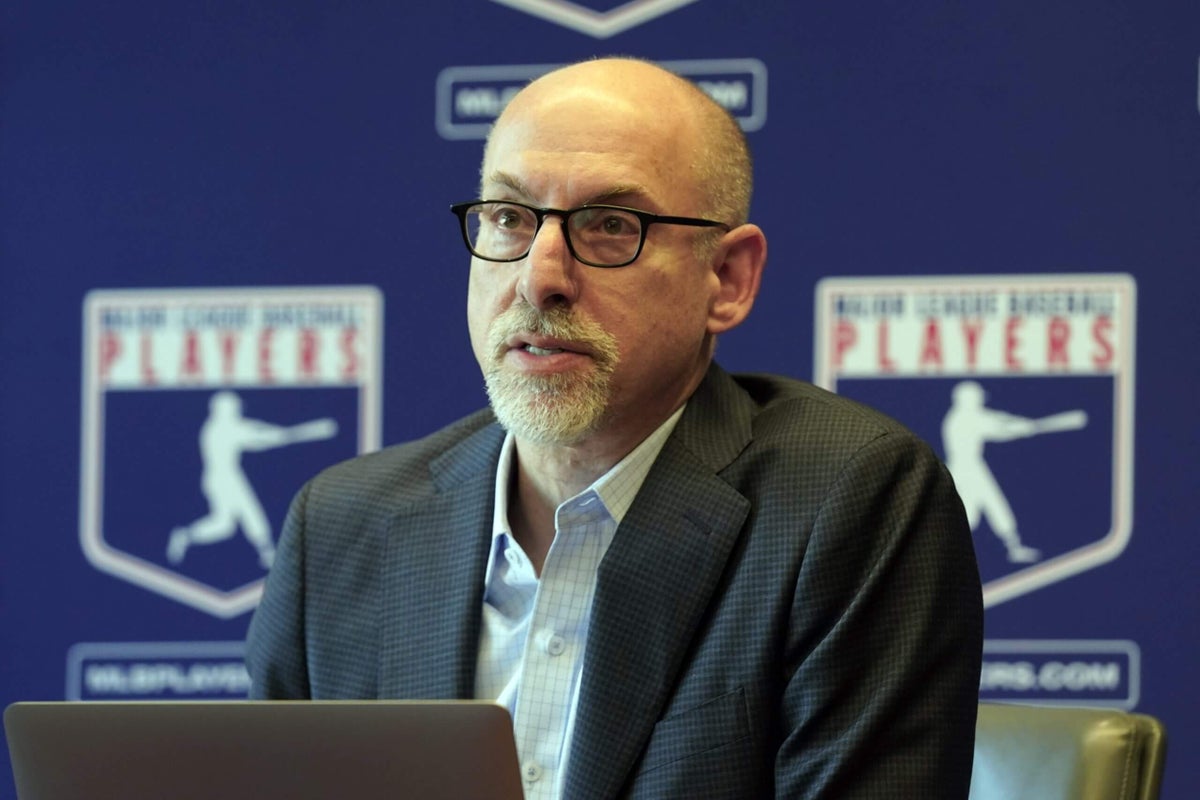
In preparation for a potentially lengthy lockout, the Major League Baseball Players Association entered this year with $519.3 million in total assets, per an annual filing the union submitted to the Department of Labor on Tuesday. That’s a 68 percent jump from the $353.1 million figure the union reported at the end of 2024, a difference powered by licensing checks. For both 2024 and 2025, players agreed to put aside 100 percent of their licensing revenue.
Major League Baseball, meanwhile, is said to have even more money set aside: about $75 million per club has been put on reserve, a person briefed on league finances who was not authorized to speak publicly said, confirming prior reports. That’s $2.25 billion across the league — and it’s not all the owners can draw on.
The league operates an investment fund called Baseball Endowment L.P., that it could tap into if need be, the person briefed on league finances said.
MLB is not subject to the same public disclosure requirements as the union, but the Atlanta Braves, a publicly traded entity, reported that their 1/30th share of BELP was worth $43.7 million at the end of 2025. (The Braves cite that value as “carrying amount,” an accounting term that means the figure might not ultimately represent the fund’s market value.)
MLB and the union declined comment.
Negotiations over baseball’s next labor deal are expected to begin as soon as the second half of April. Owners are gearing up for their strongest push for a salary cap since 1994-95, when a player strike lasted 232 days and led to a canceled World Series.
The upcoming negotiations are not expected to produce an agreement before the current deal expires at 11:59 p.m. ET on Dec. 1. Without one, owners will likely initiate a lockout, which will put free-agent signings, trades and the rest of the sport’s typical offseason activities on hiatus.
In the negotiations that produced the 2022-26 CBA, owners started a lockout in December 2021 that was resolved in March 2022, just in time to play a full slate of 162 games during the ’22 regular season.
Whether any regular-season games in 2027 will ultimately be canceled is the great unknown.
The players’ union has historically been willing to miss many games to avoid a salary-cap system, which it believes harms players’ income. If the owners are set on a salary cap, the fallout could be ugly.
But the sides also have great incentive to preserve a full season of play. Baseball has a burgeoning sense of momentum. The sport’s rule changes, such as the pitch clock, have been positively received, and television ratings have trended upwards as well. The industry’s annual revenues were about $12.1 billion in 2024, a number likely only to be higher this year.
It’s common practice for players to put aside funds as they approach bargaining, but they have more than double the amount they did entering the last collective-bargaining negotiation, which began in 2021. At the start of that year, the union reported $192.3 million in assets.
Fanatics, the licensing and merchandise behemoth, paid the union $106,425,506 in 2025, per Tuesday’s filing.
The union’s financial disclosure was the first it has filed since the ouster of Tony Clark as executive director in February. Clark made $3.58 million last year.
Bruce Meyer, named interim executive director in the wake of Clark’s exit, received $1.56 million last year as Clark’s second-in-command. General counsel Matt Nussbaum, now interim deputy director, made $916,840 last year.
Besides the standard disclosure form the union submits to the DOL annually, called an LM-2, the union in the past sometimes also publicly shared a supplemental third-party financial statement put together by the international accounting firm Mazars. The union hasn’t submitted that additional form to the DOL for the last two years, however.
The last time that document was filed, in 2024, it said Clark was in line for a $3.76 million salary in 2026 and $3.95 million in 2027. It’s unclear what the union will pay out to him after he resigned after an internal inquiry that revealed an inappropriate relationship with an employee, his sister-in-law.
Federal investigators have also probed Clark’s management of the union and its finances.
Outside counsel the union retained to represent its membership amidst that investigation, Morrison Foerster, was paid $100,000 by the union in 2025, per Tuesday’s filing.